Five executives, one stand number, and the limit of what that proves
Nordic Network Ltd will bring five members of its senior leadership team to SiGMA World 2026 in Rome, running from 2 to 5 November, and the team will be based at stand H3-3005. That is the verified story in full. What it tells you about whether a given platform is licensed, solvent, or safe to deposit with is close to nothing, and the gap between those two statements is where a lot of affiliates and players get burned.
The reported attendees are Co-founder and Group CEO Håvard Lehn, Fabian Broich (Director of Nordic Partners Gaming), Anders Abrahamsen (Head of External Partnerships), Anders Loe (Affiliate Manager) and Victoria Kalemis (Head of Finance). The stated purpose is meeting operators, affiliates and partners, with conversations covering the group’s affiliate business and Nordic Partners Gaming’s work connecting licensed iGaming companies with esports organisations and gaming creators. The group also recently acquired a Counter-Strike 2 team ranked 131st in the world, with the stated aim of pushing it into the top 50.
All of that is legitimate industry news. None of it is a licence. The cost of confusing the two is concrete: a player who treats “they exhibit at the big show” as a safety check can end up with a pending withdrawal and no regulator to complain to, and an affiliate who skips the registry check can spend a quarter’s content budget promoting a brand that loses its permissions mid-campaign.
What SiGMA World is, and why the industry treats it as a meeting room
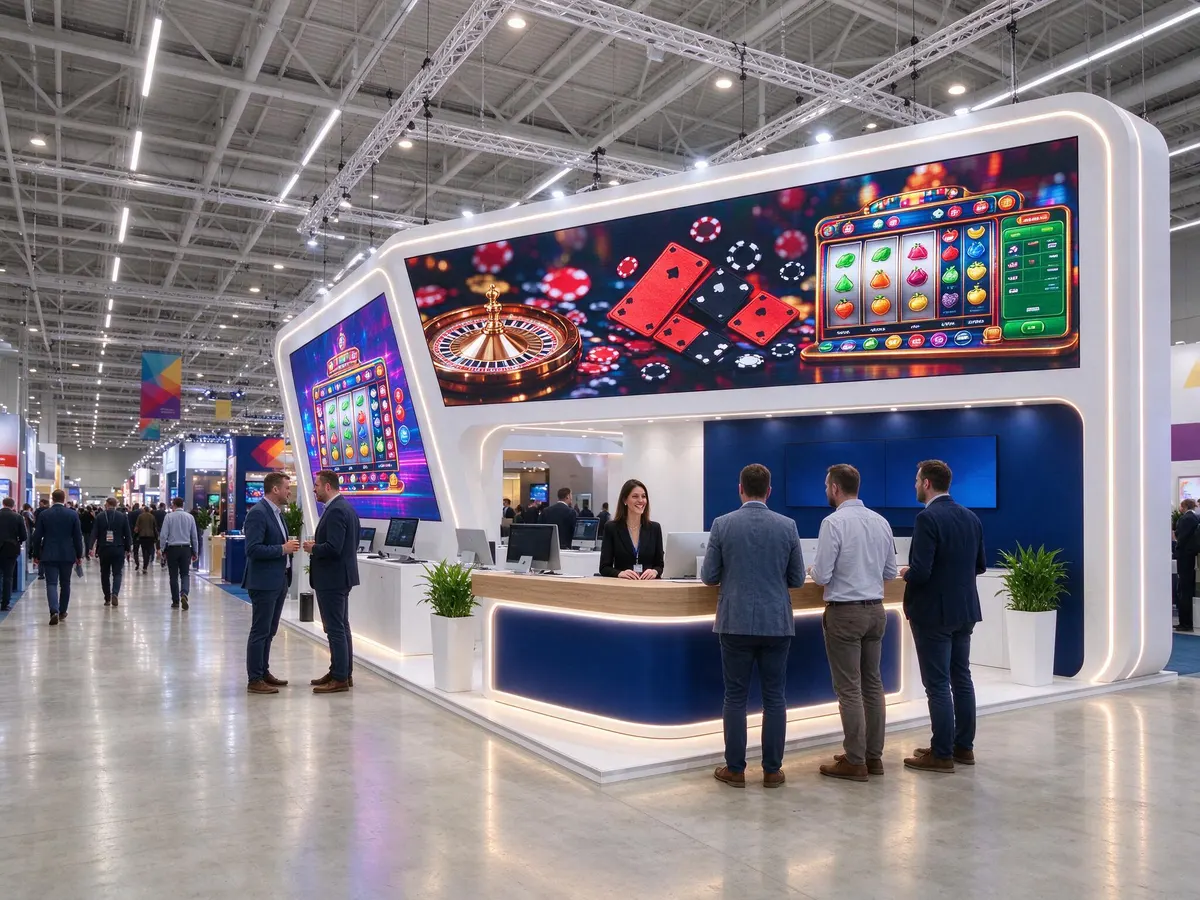
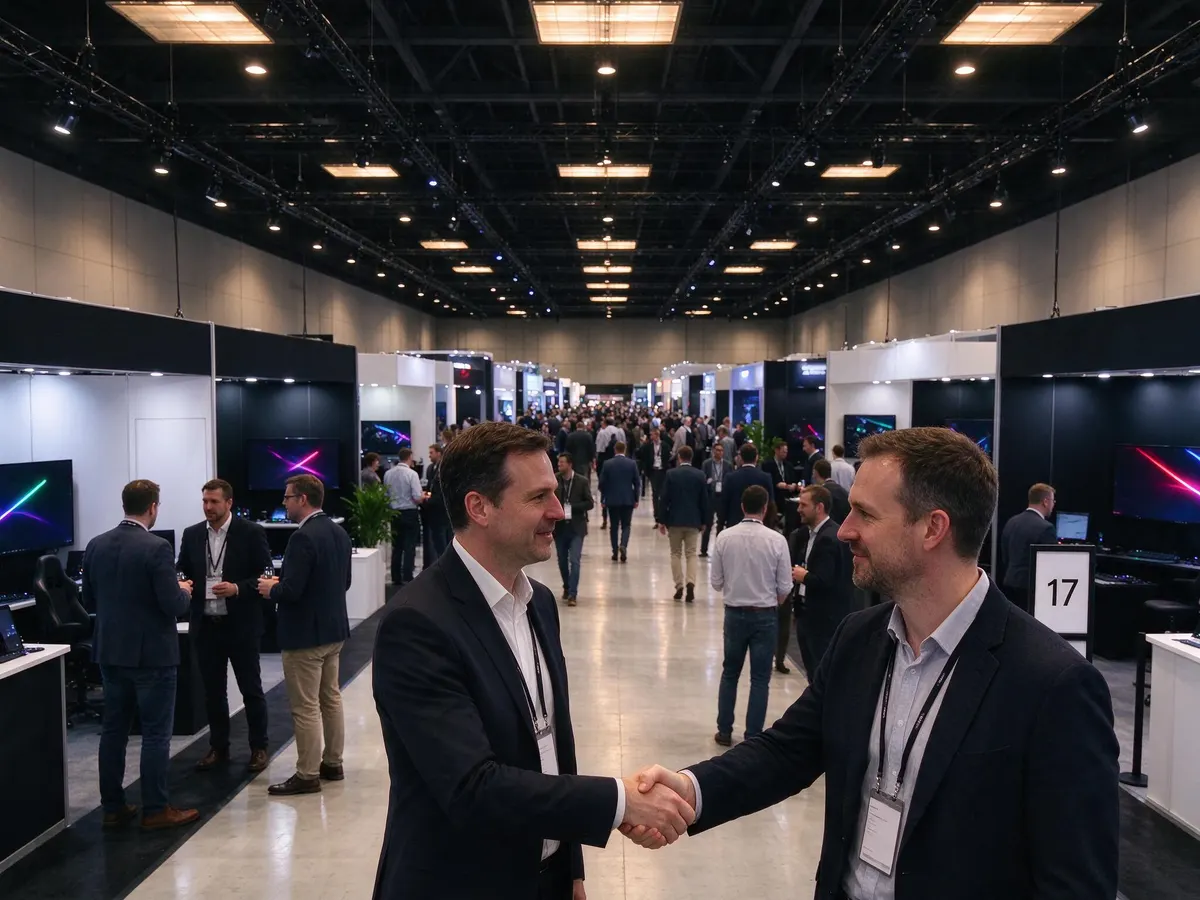
SiGMA World is a business-to-business iGaming conference and exhibition, part of the SiGMA series of events, with the 2026 edition held in Rome. It exists so that the commercial layer of the industry can do in four days what otherwise takes four months of email: sign partnerships, renegotiate affiliate terms, shop for platform providers and payment rails, and pick up panel-stage signals about where regulation is heading.
Treat the headline attendance figures organisers publish with the same scepticism you would apply to any self-reported marketing number. The useful thing about SiGMA World is not its size but its composition.
Who actually walks the floor
Four groups dominate, and they want different things from each other:
- Operators and casino brands, hunting for content, traffic and payment solutions.
- Suppliers: game studios, platform providers, payment processors, KYC and compliance vendors.
- Affiliates and affiliate networks, negotiating revenue share and CPA deals.
- Regulators, licensing consultants and gaming lawyers, usually on panels and in meeting rooms rather than on stands.
That last group is the one people misread most often. A regulator speaking on a conference stage is explaining policy, not vouching for the companies exhibiting twenty metres away. Nobody at the door is checking licences before issuing a badge.
Why Nordic Network Ltd sent leadership rather than a booth crew
Companies send senior people to iGaming industry events because only senior people can agree to things. A booth staffed by marketing coordinators collects business cards; a booth with the Group CEO and the Head of Finance on it can discuss commercial terms and actually commit to them. Lehn’s own framing, quoted in the announcement, is that SiGMA World is where you “sit down face to face with the people you already work with, and meet the ones you’d like to.”
There are four practical reasons behind a trip like this, and they are worth separating because readers often collapse them into one:
- Deal bandwidth. Partnership and affiliate negotiations compress enormously when decision-makers are in the same room.
- Relationship maintenance. Existing partners get face time, which is cheaper than losing them.
- Visibility with press and potential investors, particularly after a year of structural changes, as the Nordic Network announcement describes with the launch of Nordic Partners Gaming and the esports investment.
- Compliance signalling. Being visible, named and findable at a public industry event is the opposite of what a fly-by-night operation does.
That fourth point is real, and I would not dismiss it. Anonymous operators run from daylight; they do not book stand space and publish the names and job titles of five executives. It is a weak positive signal, and weak positive signals still count for something.
They just do not count for much. A booth is a purchase. Anyone with a marketing budget can buy one.
Expo attendance is not a licence, and the two are easy to confuse
Appearing at a major industry expo does not indicate that a platform is properly licensed. Exhibition space is sold commercially; a gambling licence is granted by a regulator after financial, technical and probity checks, and it can be suspended or revoked. The first is a line item. The second is a legal status you can look up.
The differences between licensing regimes matter too. A Malta Gaming Authority licence involves substantial corporate, financial and player-protection requirements, and the MGA publishes a searchable register of licensees along with public notices when a licence is suspended. The UK Gambling Commission runs a similar public register and is explicit about which operators may serve British consumers. Curaçao licences have historically been issued through a lighter-touch structure with fewer meaningful redress mechanisms for players, and the jurisdiction has been reforming that framework; a Curaçao credential therefore tells you considerably less than an MGA or UKGC one, even when it is genuine.
Where to actually verify a licence
Go to the regulator, never the casino. Take the licence number from the operator’s footer, then search for it in the issuing authority’s own register and confirm three things match: the number, the legal company name, and the brand’s domain. Operators frequently list a licence held by a parent or sister company, or display a number that was valid two years ago. A PDF certificate hosted on the casino’s own server proves only that someone can make a PDF.
A due-diligence order of operations for Indian-facing players and affiliates
Here is how the signals actually rank when you are assessing a new platform. Event presence belongs near the bottom, not because it is meaningless, but because everything above it is verifiable by a stranger in ten minutes.
| Signal | What it proves | How to check it |
|---|---|---|
| Licence in a regulator’s public register | A named authority currently permits the operator to run games | Search the MGA or UKGC register directly by licence number |
| Named legal entity and registration number | There is a company you could, in principle, pursue | Terms and conditions, footer, corporate registry of the stated jurisdiction |
| Published payment and withdrawal terms | Limits, fees and timelines are disclosed before you deposit | Banking page plus the withdrawal clauses in the full T&Cs |
| Working responsible-gambling tools | Deposit limits, cool-off and self-exclusion are implemented, not just advertised | Open the account settings and confirm the controls exist |
| Audited RTP and RNG certification | Game outcomes are independently tested | Testing-lab references on the operator or provider site |
| Trade show or expo presence | The company is publicly identifiable and has a marketing budget | Event exhibitor listings, press announcements |
Red flags that outrank any conference badge
- A licence number that returns nothing in the issuing regulator’s register, or returns a different company name.
- Withdrawal terms that appear only after you deposit, or maximum cashout caps buried in bonus clauses.
- Wagering requirements described in marketing as “low” without the multiplier, the game weighting or the expiry stated anywhere.
- No way to set a deposit limit or self-exclude from inside the account.
- Support that cannot name the company’s registered legal entity.
For readers in India, the practical problem is that most platforms serving the market are licensed offshore, which puts the entire burden of verification on you. Treat UPI availability as convenience, not credibility. And keep the basic arithmetic in view: every casino game carries a house edge, so a 96% RTP slot returns roughly ₹96 per ₹100 staked across millions of spins and nothing in particular across yours. Set deposit limits before you need them, and use the self-exclusion tools if play stops being entertainment.
What the 2026 expo cycle is actually showing
The more interesting detail in the Nordic Network announcement is not the stand number but the stated remit of Nordic Partners Gaming: connecting licensed iGaming companies with esports organisations and gaming creators. That, plus a Counter-Strike 2 roster acquired with a top-50 ambition, is the direction a lot of affiliate-side business has been moving — away from pure search traffic and towards creator and esports audiences, which happen to skew young enough that age-verification and advertising rules deserve real scrutiny.
Expos like SiGMA World are where that shift becomes legible, because the stands tell you who is buying what. What the floor cannot tell you is the only thing that eventually matters to a player: whether the operator pays, on time, without inventing a clause. That answer never appears at a trade show. It appears in a regulator’s register, in the withdrawal terms, and in the complaints record — and if you are going to spend ten minutes on due diligence, spend it there instead.