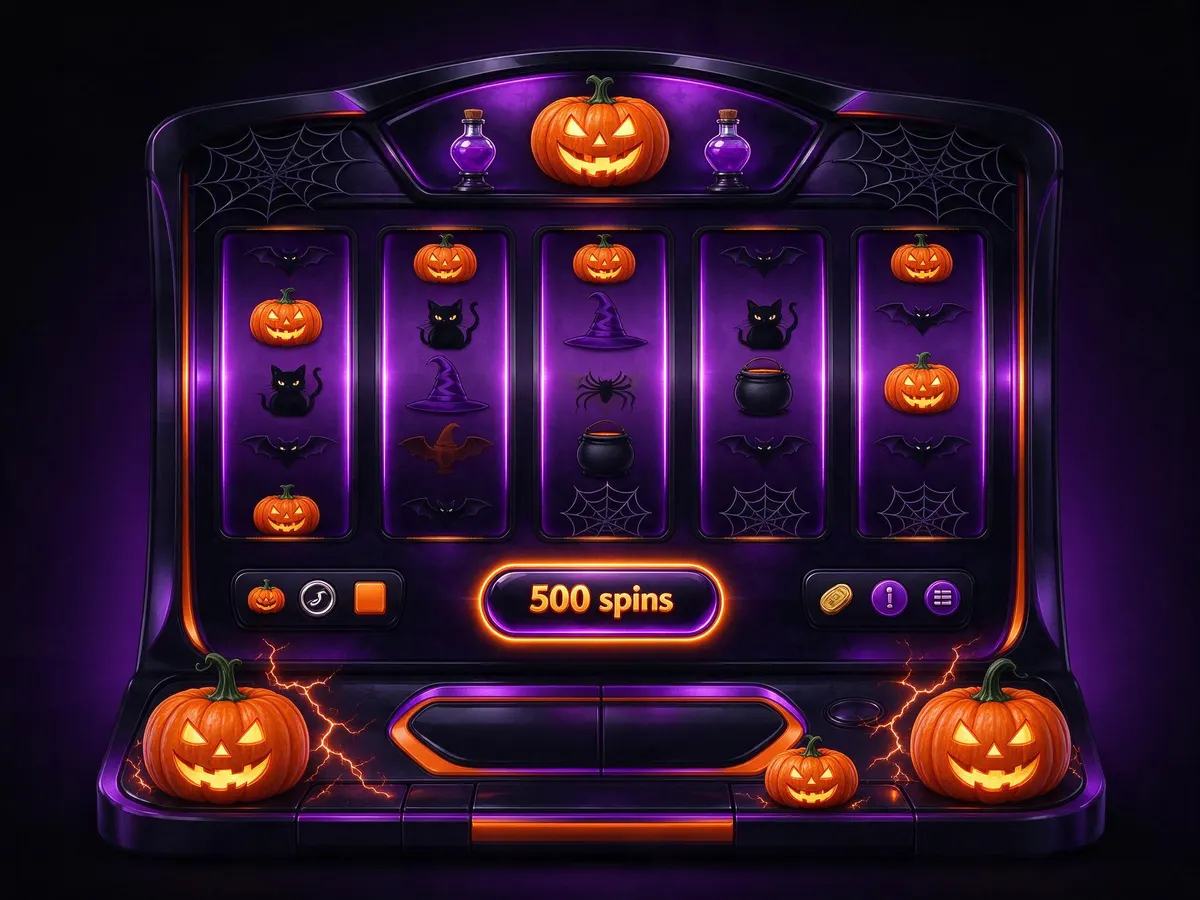
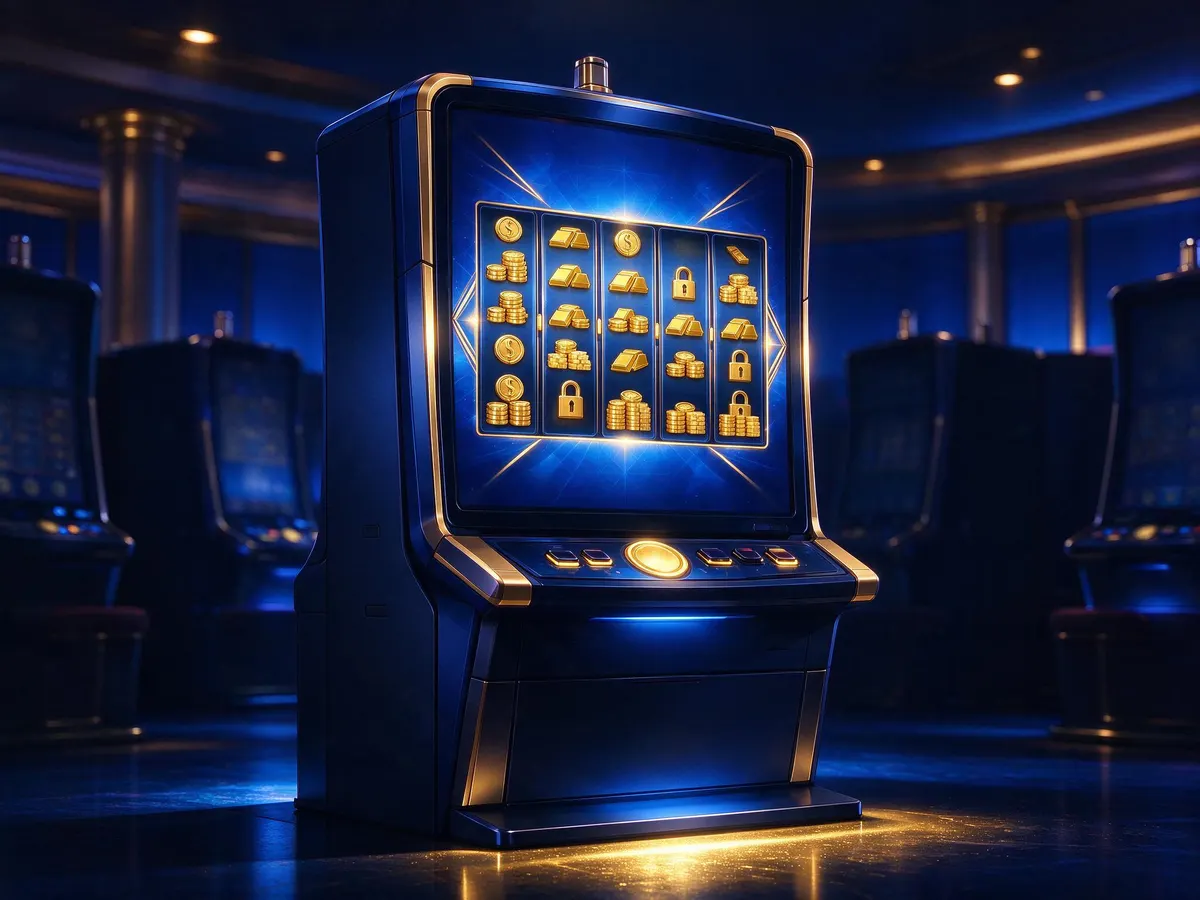
Slot bonus features explained: the three levers a studio actually pulls
Four. That is how many stacked features AGS packed into the bonus of a single new title, Rakin’ Bacon! Ultra Squeallionaire, demoed on its new Glō Upright 43 cabinet at G2E and covered by CDC Gaming: boosts, symbol transformations, multipliers and “waterfalls” that move cash symbols down the reels. Four layers, one round.
With slot bonus features explained properly, that number stops looking like generosity and starts looking like what it is: a pacing decision. A bonus feature is any round that pays by different rules than the base game, triggered by a specific symbol combination and usually offering respins, free spins, multipliers or cash-symbol collection. Studios build engagement from three levers, and only three: volatility (how the payouts are distributed), trigger design (how often and how visibly the round comes into reach), and theme (what the whole thing looks and sounds like). None of the three changes the house edge. That is the part most explainers skip, and it is the part this one is built around.
Volatility decides how a bonus round feels
Volatility, also called variance, describes how a game’s returns are spread out over time: high volatility means rarer but larger payouts, low volatility means more frequent but smaller ones. It is the single biggest reason two slots with identical RTP can feel like completely different games.
High volatility versus low volatility bonus rounds
Think of two ways to hand out the same total amount of money over a year. One pays a small amount every week. The other pays nothing for months, then a lump sum. The yearly total is the same; the experience is not. High-volatility bonus rounds are the lump sum: long stretches where the feature does not arrive, then a round that resolves in a way worth remembering. Low-volatility rounds trigger more readily and resolve more modestly.
Layered features like the ones in the AGS demo tend to sit toward the higher-variance side, because stacking boosts and multipliers on top of a cash-collect mechanic widens the range of possible outcomes for that round. Widening the range is the whole point. A bonus that always paid roughly the same amount would be arithmetic, not a feature.
Volatility is not your chance of winning
Here is where players most often go wrong. Volatility says nothing about whether a game returns more over the long run. A 96% RTP slot returns about ₹96 per ₹100 wagered averaged over millions of spins, whether it is low or high volatility; the remaining 4% is the house edge either way. High variance does not mean a better game, and it does not mean you are “due”. Each spin is produced independently by the RNG, so a drought carries no information about what comes next.
What volatility does affect is how fast a given bankroll can disappear while you wait for the feature. That is a budgeting fact, not an odds fact, and it is the one worth acting on.
How hold and spin works, and what the AGS demo actually shows
Hold and spin, sometimes labelled respin or link-and-lock, works like this: a minimum number of cash or jackpot symbols landing in the base game locks those symbols in place and starts a short respin counter, typically three. Every new cash symbol locks too and resets the counter to its full value. The round ends when the respins run out or the screen fills, and the player collects the sum of the locked values, plus any jackpot the fill triggers.
That is the general industry mechanic, and it has been the dominant cash-collect template for years. What the G2E coverage of Rakin’ Bacon! Ultra Squeallionaire confirms is narrower: four stacked features built from boosts, symbol transformations, multipliers and a waterfall that moves cash symbols down the reels to create additional wins, demonstrated by product manager Ben Kongpipattanakarn as the launch title for the Glō Upright 43.
What it does not confirm is a paytable. No respin count, no trigger threshold, no jackpot tiers, no RTP configuration. I am not going to fill that in with a plausible-looking number, because on this class of product the number is often not fixed anyway: land-based titles frequently ship with more than one math configuration and the operator selects one, which is precisely why “just check the RTP first” is advice that travels poorly from an online lobby to a casino floor. Online, the information screen usually states the figure. On a cabinet, you may not be shown it at all.
Why a pig in a money suit sells a game
Theme design does one job: it makes a game findable and memorable on a floor or in a lobby where hundreds of competitors are one tap away. A cartoon pig and a bacon pun are not an artistic statement, they are a retrieval cue. Players remember “the pig game” and ask for it by that name, which is why franchises get extended rather than replaced.
Theme also carries the pacing. Art, sound and animation tell you where you are in the round: the particular noise a cash symbol makes when it locks, the build in the music as the screen fills, the visual of symbols cascading down the reels. Anticipation is manufactured by those cues, and a well-built feature stretches the moment between “this might happen” and “here is the result”. Lighthearted themes do this with comedy instead of tension, which is also a deliberate choice, since humour softens a losing round in a way that a grim fantasy theme does not.
Worth being blunt about: none of this is deceptive on its own, but it is persuasion, and it is aimed at keeping you in the seat. Recognising a design cue for what it is costs you nothing and makes you a harder audience.
What a new cabinet launch tells you about slot design right now
A new slot game release almost never reinvents the bonus. It iterates. Launching Rakin’ Bacon! Ultra Squeallionaire as the title that leads the Glō Upright 43 follows the standard pattern: take a franchise players already recognise, add a layer or two to the feature set, and put it on hardware with a bigger, brighter screen to make those layers legible.
Cabinet design is doing real work there. Stacked features need screen real estate, because four interacting mechanics in one round become confusing fast. That is also why these mechanics migrate to online slots in simplified form: the same cash-collect logic, fewer simultaneous layers, because a phone screen cannot carry the same visual load. Most Indian players will meet this family of features online rather than on a floor, in a version trimmed to fit.
A field guide to the common bonus triggers
Four mechanics cover most of what you will encounter. Learning to recognise them makes any unfamiliar game readable within a few spins.
| Mechanic | How it starts | What drives the payout size |
|---|---|---|
| Scatter-triggered free spins | Three or more scatter symbols anywhere on the reels, position irrelevant | Number of spins awarded and any in-feature enhancement, such as extra wilds |
| Multiplier and wild mechanics | Wild lands and substitutes for other symbols; multiplier wilds apply a factor to the win | Size of the multiplier and whether multipliers add or combine |
| Pick-style bonus round | Bonus symbols on specific reels open a selection screen | Values hidden behind the picks and how many picks before a “collect” ends it |
| Hold and spin / cash collect | A minimum count of cash symbols locks them and starts a respin counter | Total of locked symbol values, plus jackpots for filling the screen |
Different wrapping, same underlying idea: the game withholds the outcome for a few extra seconds and gives you something to watch while it does.
Theme and bonus type do not move the math
No. A slot’s theme, art style or bonus flavour has zero effect on its RTP or house edge, which are set by the underlying math model and verified by the RNG that drives every outcome. A pig-themed hold-and-spin and a bare-bones fruit machine with the same configured RTP return the same percentage over the long run. The pig version simply distributes that return differently and makes the wait more entertaining.
The myth worth killing is that a more elaborate bonus implies a more generous game. Elaborate features are usually funded by a leaner base game: money moved from frequent small wins into rarer feature payouts. The total does not grow because the animation got better.
So the practical move is unglamorous. Decide the amount you are willing to lose before you open the game, set a deposit or session limit while you are still thinking clearly, and treat the feature as the entertainment you paid for rather than a return you are owed. If any of the mechanics above start feeling like a reason to keep going after you have hit your limit, that is the design doing exactly what it was built to do, and the honest response is to stop. Most licensed operators offer deposit caps, cool-off periods and self-exclusion; using them early is cheaper than using them late.
The gap you cannot close by reading an article is the configuration itself. You can identify the mechanic, read the volatility from how a few hundred spins behave, and see the theme for the hook it is. Whether the specific machine in front of you is running the 96% build or something lower is a question the game often will not answer, and no amount of feature literacy substitutes for that number.