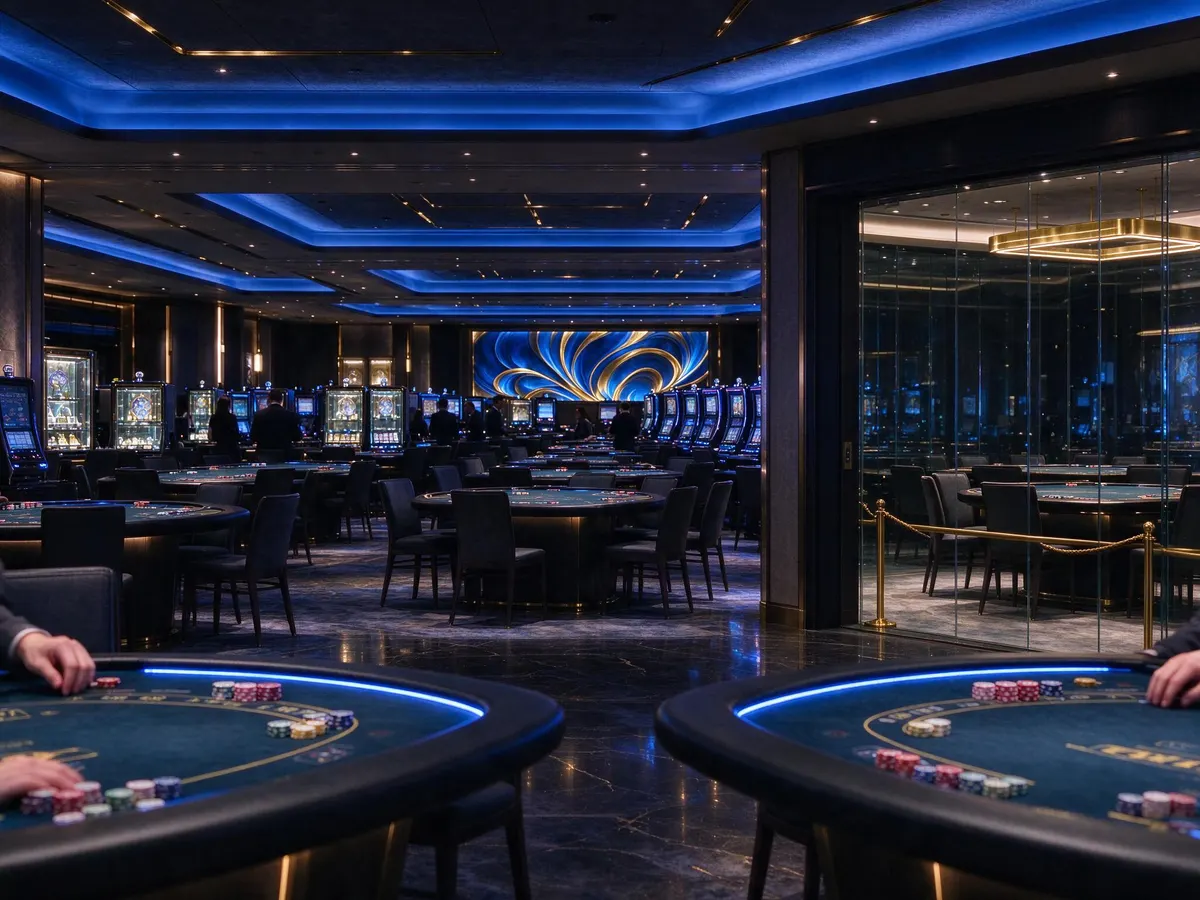
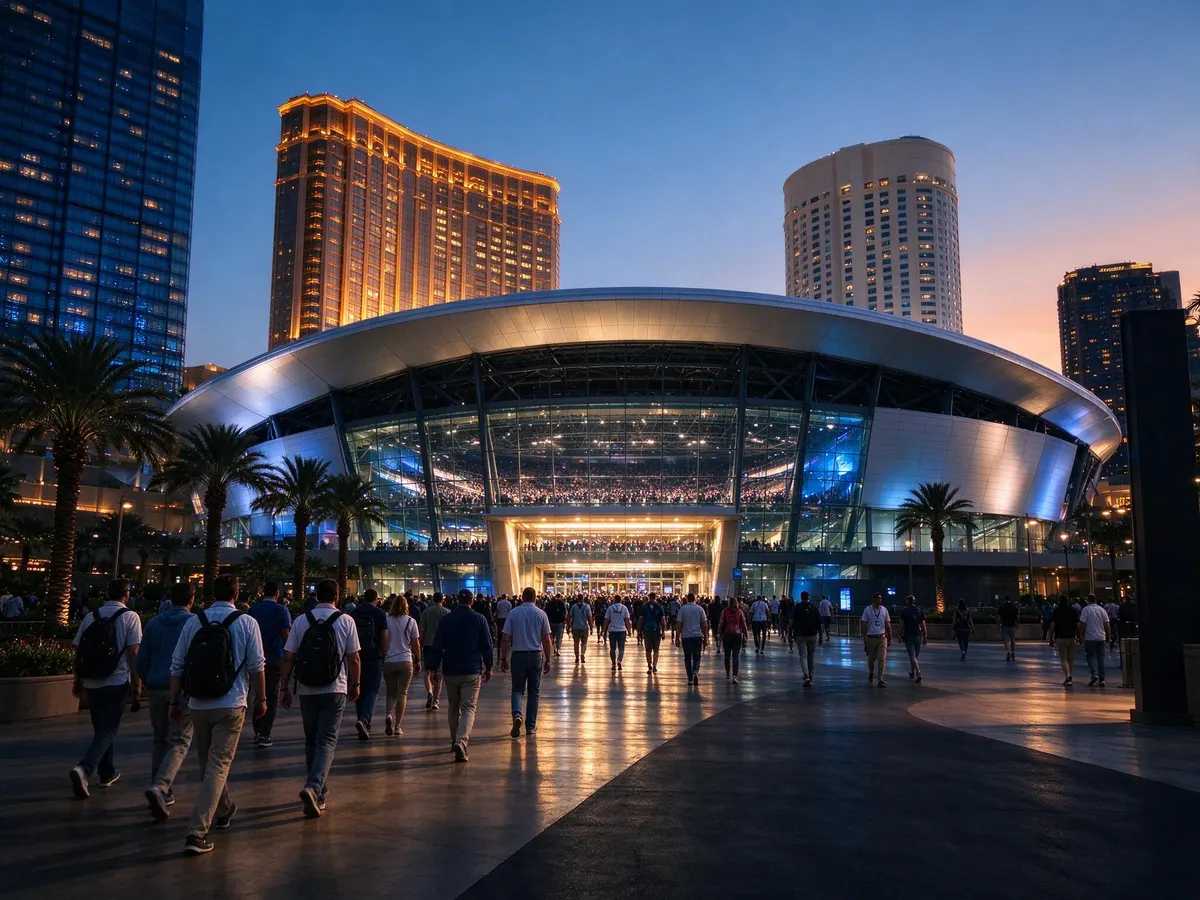
The casino sports arena trend is easy to define and much harder to justify: gaming operators are building, part-funding or branding major sports venues to drag crowds into the resort around them. Resorts World Las Vegas is the newest example of the pitch. Its president and chief financial officer, Carlos Castro, told the Las Vegas Review-Journal that the North Strip is the most turnkey location on the Strip for a future NBA arena. One detail worth getting right: the 38 undeveloped acres on the North Strip, immediately south of Resorts World, are owned by Wynn Resorts, not by Resorts World Las Vegas, whose own property spans nearly 88 acres.
That is a claim, not a deal. But the reasoning behind it explains something bigger about where casino resorts think their next decade of growth comes from, and about a trade-off nobody in the industry likes to state plainly.
What Resorts World actually claimed, and what is confirmed
Castro’s statement was a site pitch, not an announcement. He argued that “the North Strip is where the next chapter of Las Vegas is being written,” framing the luxury corridor anchored by Resorts World, Wynn and Fontainebleau as the natural home for an NBA building. The company’s case rests on physical advantages: a $4.3 billion integrated resort already operating across nearly 88 acres, existing parking, utilities and access roads, Strip frontage plus rear access via Sammy Davis Jr. Drive, and enough land in the corridor to skip the multi-year parcel assembly that hobbles rival proposals. An arena there would host 41 regular-season home dates plus concerts and combat sports, with the stretch between Spring Mountain Road and Sahara Avenue as the stated beneficiary.
What is not confirmed: the team, the owner, the site, the timeline. More than a dozen arena concepts have been floated in Las Vegas over the past several years, and most were never serious.
Why Las Vegas keeps coming up in NBA expansion talk
Because the league has made it a candidate. In September the NBA shortlisted three ownership groups for a Las Vegas franchise: one led by Nancy Walton Laurie and Bill Laurie, one led by Bill Foley and Jerry Colangelo, and one led by Marc Lasry and Steve Apostolopoulos. The venue decision follows the owner decision, not the other way round, and none of the three has publicly committed to a site. Foley, who owns the Vegas Golden Knights, was initially linked to housing a team at T-Mobile Arena; after partnering with Colangelo’s Las Vegas Jacks group, reporting indicates the combined group intends to build new instead, with Manica Architecture involved in design work.
The league has signalled a goal of finalising expansion by year end, with Las Vegas and Seattle franchises targeted to launch as early as the 2028-29 season, though 2029-30 has also been reported as a possibility for Las Vegas. Read all of that as direction of travel, not a schedule.
Why a resort operator wants a building it will barely use
An integrated resort is a single property that bundles hotel rooms, a casino floor, restaurants, retail, convention space and entertainment venues, so that a guest can arrive and never leave. Arena adjacency is the logical extension of that model. The arena fills rooms midweek, pushes thousands of people past restaurants and bars on the way in and out, lengthens the average stay by a night, and gives the property a reason to be in the conversation when nobody is thinking about gambling.
Note what that list does not include: profit from the arena. A modern NBA-scale building costs well over a billion dollars and sells roughly 41 basketball dates a year, topped up with concerts and fights it has to win against every other venue in town. The returns live next door, in rooms, food, beverage and the casino floor, which is exactly why operators want to be the neighbour, the landlord or the name on the roof rather than the sole owner of the concrete.
Who has already done this
Las Vegas is the clearest case, but the pattern is not limited to Nevada. A few established examples:
| Venue | Casino or resort link | Nature of the tie |
|---|---|---|
| T-Mobile Arena, Las Vegas | MGM Resorts International | Developed as a joint venture with AEG, opened 2016, sitting directly behind MGM properties on the Strip |
| Allegiant Stadium, Las Vegas | Strip resorts collectively | Public contribution funded through an increase in the Clark County hotel room tax; the stadium sits a short walk west of the south Strip |
| Caesars Superdome, New Orleans | Caesars Entertainment | Naming rights agreement on an existing NFL stadium |
| Hard Rock Stadium, Miami Gardens | Hard Rock International, owned by the Seminole Tribe of Florida | Naming rights carrying the casino and hospitality brand |
| bp pulse LIVE (formerly Resorts World Arena), Birmingham | Genting’s Resorts World Birmingham | Carried the Resorts World Arena name from 2018 until a 2024 naming rights deal renamed it bp pulse LIVE; the venue sits beside the operator’s leisure and casino complex |
The spread matters. Ownership, tax-funded adjacency and naming rights are three very different levels of exposure to the same idea, and most operators have chosen the cheapest one that still buys the association. Birmingham also shows the limit of the cheapest option: naming rights are rented, and the Resorts World name came off that arena in 2024 when another sponsor took the deal.
Where sports betting fits, and where it does not
Live sport and sportsbooks reinforce each other, but less mechanically than the pitch decks suggest. A crowd of 18,000 people who have travelled for a game is a crowd already engaged with the sport, already in the building’s catchment, and an in-resort sportsbook captures a slice of that attention before tip-off and during it. Betting handle rises with attention, and nothing concentrates attention on a single event like a home date in a destination city.
The honest limit is that betting is a low-margin business relative to slots. U.S. sportsbook hold reached about 10.15% of handle in 2025, above the single-digit rates typical of the earlier post-PASPA years, and operators run books partly as a traffic and loyalty product. So the arena does not primarily exist to feed the sportsbook. It exists to feed the resort, and the sportsbook is one of several ways the resort monetises a crowd that came for basketball.
If you follow the industry as a player rather than an investor, that distinction is worth keeping in view. More entertainment wrapped around betting does not change the maths of any individual wager: every market carries a built-in margin, and every casino game carries a house edge. Set deposit and session limits before an event weekend, not during one.
The trade-off: arena crowds are not casino crowds
Here is the part the industry tends to skate past. The visitors an arena attracts skew younger and more event-driven, and they spend differently. They buy tickets, merchandise, food and a room, then leave. Non-gaming revenue has become the larger share of the Strip’s take precisely because of guests like this, which is a genuine success story and also a quiet admission that the gaming floor is no longer the engine it was.
So an operator funding an arena is buying footfall it cannot fully convert, at a capital cost it cannot recover from the building itself, on the bet that the surrounding real estate appreciates and the brand gets permanently louder. Sometimes that works. It worked well around T-Mobile Arena. It is not a law of nature.
My own view, plainly: I would not be the operator who builds and owns the arena. I would be the operator who controls the land beside it, takes the naming rights, and lets someone else carry the construction risk and the 324 dark nights a year. Resorts World’s pitch is smart for exactly that reason. It is not offering to build an NBA arena. It is offering a corridor, infrastructure and a neighbourhood to whoever does.
What it signals for casino industry growth
The direction is diversification away from dependence on the gaming floor, and arenas are one instrument among several. Whether the model travels is a separate question. It needs three things at once: a tourist base large enough to fill a building outside the local market, a regulatory regime that lets a casino sit beside a major sports venue without friction, and a league or anchor tenant willing to be associated with gambling at all. Singapore, Macau and the emerging integrated resort projects in Japan and the UAE have the first; the second and third vary enormously.
What stays unresolved is the conversion rate. Nobody has published a convincing figure for how much of an arena crowd’s spend ends up on the resort’s books rather than simply inside the venue. Until someone does, the casino sports arena trend rests on a reasonable inference rather than a proven return, and the North Strip remains a well-argued pitch waiting on three billionaires to pick a side.