So who is TaDa Gaming?
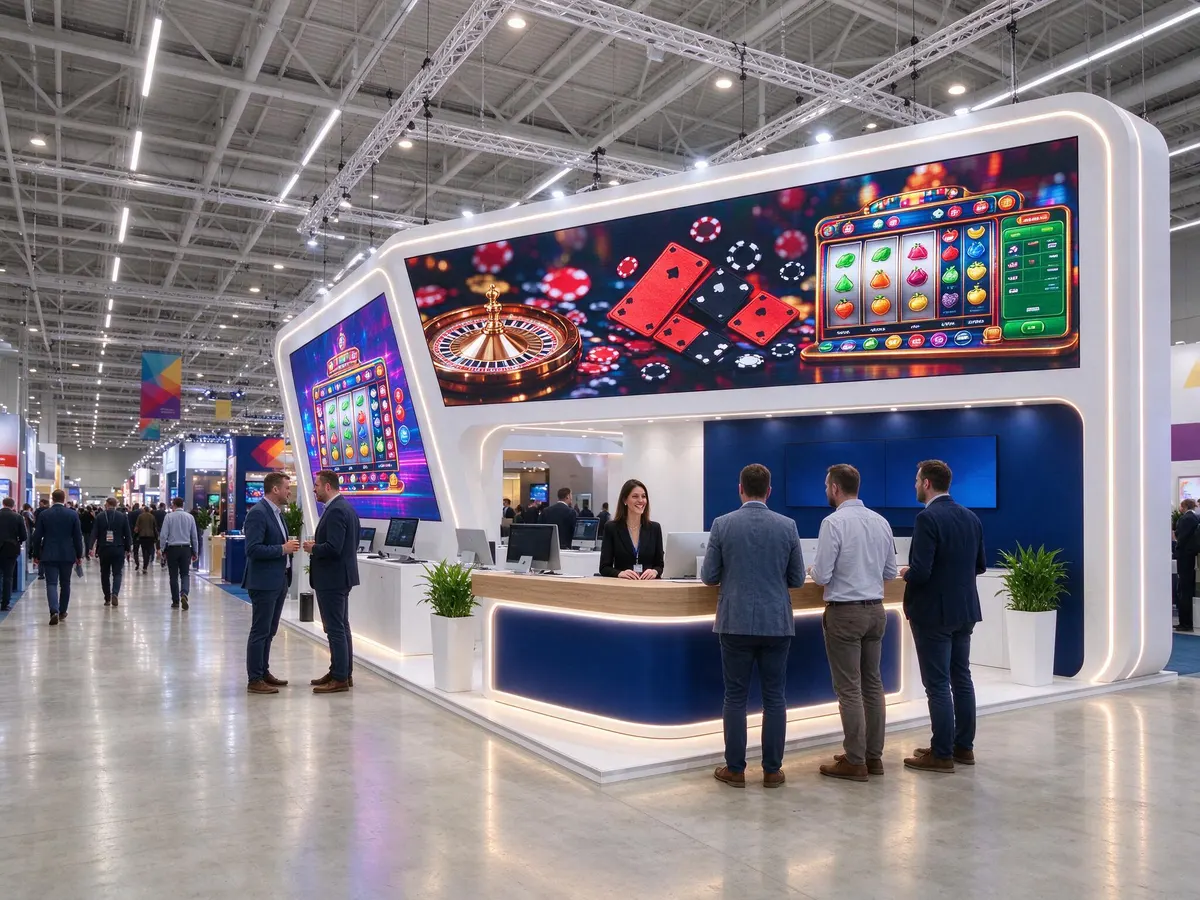
Eighty-six. That is how many TaDa Gaming titles hold certification under Italy’s new 2026 regulations, and that number tells you more about the company than any stand banner will. TaDa Gaming is a business-to-business casino content supplier: it builds games and licenses them to online operators rather than running a casino of its own. According to Focus Gaming News, it wrapped up its 2026 exhibition programme at the SiGMA World Summit in Rome, held at Fiera Roma from November 2 to 5, from Stand H6-6036.
If you typed “TaDa Gaming live casino” into a search box expecting a wall of streamed blackjack tables, hold that thought. The supplier’s publicly documented 2026 push leans on slots and fish-shooting games, plus titles built specifically for the Italian market. Below, what is actually verifiable, what is general industry context, and where the line sits between the two.
What the public record says about TaDa Gaming’s market position
Three concrete facts anchor TaDa Gaming’s current standing, all from the same trade report. It has 86 titles certified under Italy’s 2026 regulatory framework. It picked up two EGR Italy Awards nominations, one for Innovation in Casino tied to its fish-shooting games and one for Casino Platform Supplier. And it presented what the report calls a proven European portfolio alongside locally developed games at SiGMA World Summit in Rome.
What is not in the record, and what you should treat with suspicion if you see it stated confidently elsewhere: founding year, headquarters, ownership, and specific licence numbers. Those details simply are not in the source material, so this article will not supply them. A supplier being certified for one market does not tell you which other regulators have cleared it, and nobody benefits from guessing.
One signal worth reading properly, though. Fish-shooting games, sometimes called fish tables, are an arcade-style genre with deep roots in Asian gaming markets, where players shoot at moving targets for payouts rather than spinning reels. A studio earning an innovation nomination in Italy for that genre is pushing a format from one region into another. That is harder than it sounds, and it is the most interesting thing on TaDa Gaming’s 2026 scoreboard.
What games does TaDa Gaming offer?
Per the reporting, the portfolio on display in Rome combined new gameplay mechanics, classic-style slots, and games developed for local markets. That is the verified shape of it. Anyone telling you the exact title count beyond the 86 Italian certifications, or naming specific live dealer tables, is filling gaps the public record leaves open.
Since a lot of readers arrive here through a live casino search, here is how that part of the industry works in general. A live dealer studio is a physical room built like a television set: real dealer, real cards or a real wheel, multiple cameras, and software that reads the outcome and settles bets for thousands of players watching the same stream. The mechanics are the same as the game on a casino floor, including the mathematics. European roulette still carries a 2.7% house edge whether a dealer spins it in front of you or on a feed, and that number does not move because the production quality improved.
So if you find TaDa Gaming games filed under a “live casino” tab in an operator lobby, open one and check. Lobby categories are set by the operator, not the supplier, and plenty of RNG-driven games with a video presentation end up sitting beside genuinely dealer-operated tables. The paytable and game info screen will tell you which you are looking at, along with the stated RTP.
What is SiGMA World, and why does a stand number matter?
SiGMA World is one of the igaming industry’s main business-to-business event series, bringing operators, suppliers, payment companies, affiliates and regulators into one hall for a few days. The Rome edition at Fiera Roma on November 2–5 is where TaDa Gaming closed out its 2026 exhibition calendar, at Stand H6-6036. These are trade events, not consumer expos: the people walking the floor are buying and selling content, not playing it.
Why igaming studios exhibit at shows like SiGMA
Because distribution is the whole game for a supplier. A studio can build the sharpest fish-shooting title on the market and still reach nobody if no operator puts it in a lobby. Trade shows compress months of outreach into three days of face-to-face meetings with the commercial teams who decide what goes into those lobbies, and they let a supplier demo gameplay rather than describe it over email.
There is a credibility function too. Taking a stand, publishing the stand number, and standing next to award nominations is how a mid-tier supplier signals to a cautious operator that it is a real business with a compliance department. That matters when the operator is the one carrying the regulatory risk of putting your game in front of its customers.
The exhibition circuit, and what it is actually worth
Here is where I would push back on the popular read. The instinct is to treat a supplier’s expanding trade-show presence as the growth story, and the conclusion is roughly right: TaDa Gaming is worth paying attention to. But the stand is not the reason. The 86 Italian certifications are.
Exhibition circuits such as SiGMA and ICE genuinely do produce operator partnerships and open conversations in new regulated markets. What they cannot do is get a single game live. That requires the slow part: technical certification by an approved testing house, compliance with the market’s specific rules on RTP display, bet limits and session controls, and sometimes a separate licence. A supplier can book a stand in six months. Certifying 86 titles against a brand new regulatory framework takes considerably longer and costs considerably more. The booth is downstream of the certificate.
Which sets up a trade-off with no clean answer. Building locally developed games for each regulated market, as TaDa Gaming has done for Italy, wins you relevance and award nominations but splits your development budget across territories that may never pay it back. Shipping one global portfolio everywhere is cheaper to certify and easier to scale, and it frequently lands flat with players who can tell a game was not made with them in mind. Nobody in this industry has resolved that argument, and Italy’s 2026 rules are too new to say whether the localisation bet pays off there.
Where you would actually run into TaDa Gaming games
Through a licensed operator, never directly. As a live casino provider and content supplier, TaDa Gaming does not accept deposits, hold player accounts, or process withdrawals. Its games appear inside casino sites and apps that have signed a content deal, often arriving through an aggregator that bundles many studios into a single integration. In most lobbies you can filter by provider to see what is available.
That structure changes what you need to check. The supplier’s certifications tell you the games were tested; they tell you nothing about the operator holding your money. Before you play anything from any studio, confirm which regulator licenses the site, read the bonus terms for wagering requirements and maximum bet caps while a bonus is active, and look at whether deposit limits, session reminders and self-exclusion are actually available in the account settings. If you are in India, also confirm what online casino play is permitted where you live, because the rules differ by state and the operator’s licence does not override local law.
And keep the arithmetic in view. Every game TaDa Gaming or anyone else certifies carries a house edge, which is why the stated RTP is a long-run average across millions of rounds and not a forecast for your session. Set a budget you are prepared to lose, and treat gambling as paid entertainment rather than a way to make money.
What the rising profile does and does not tell you
A supplier closing its year at SiGMA World with 86 market-certified titles and two award nominations is a supplier moving from regional specialist toward multi-market presence. That is a real shift, and it is the pattern to watch across this part of the industry: certification volume in newly regulated markets, not stand sizes.
What it does not tell you is whether you will see a single TaDa Gaming game in your lobby. European certification does not travel, and the supplier’s availability in any given market depends on deals that have not been made public. If the name does show up where you play, the useful next step is unglamorous: check the operator’s licence, open the game info screen, read the RTP, and decide from there.