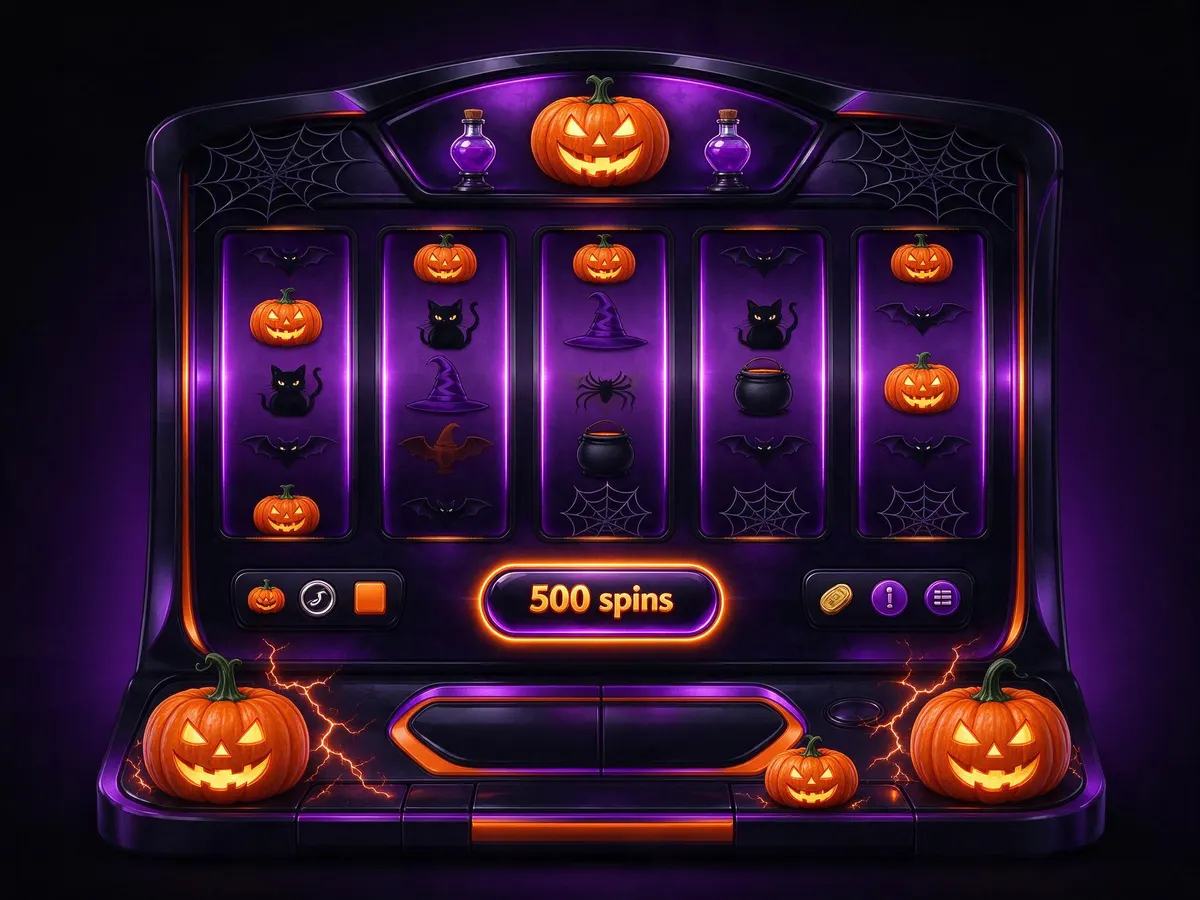
Spooky Link slot: what Aristocrat actually launched
Mid-October 2026, and a game that had spent years living inside physical cabinets on casino floors turned up in online lobbies across the United States and Canada. The Spooky Link slot is a land-based Aristocrat franchise that Aristocrat Interactive has now brought into real-money online play for the first time, starting with a title called Spooky Link Go Ghost, rolled out network-wide across all regulated US iGaming states and Canadian provinces (source: G3 Newswire, October 2026).
Two details matter more than the launch itself. First, this is genuine real-money online gaming, not a social casino app and not a cabinet-only release, which is what makes it a milestone for Aristocrat’s digital division. Second, its geography is hard-edged: regulated North American markets only. If you are reading this from India, the UK, Australia or anywhere else, Spooky Link Go Ghost is not available to you through a licensed operator, and no amount of searching will change that. Aristocrat has said further Spooky Link titles will follow through 2027, but has not named them or their markets.
That leaves the interesting question, which is not “where can I play it” but “what is actually happening under the hood when a jackpot is described as linked”.
How linked jackpot slots actually work
A linked jackpot slot pools a small slice of every qualifying wager from many games or machines into one or more shared prize funds, so the meters climb far faster than any single game could manage alone. The pool is the product. The theme on top of it is packaging.
One pool, many games
A standalone progressive grows from the bets placed on one game only. Put a hundred machines on the same network and the same contribution rate fills the meter roughly a hundred times faster, which is how headline figures get large enough to advertise. Nothing is created by linking. The money still comes out of the same place: a portion of the theoretical return is diverted from ordinary pay table wins into the jackpot fund.
That is the structural trade-off, and it has no clean answer. The same posted RTP can be delivered as lots of small wins, or as fewer small wins plus a rare enormous one. A linked game pushes you toward the second shape. For the overwhelming majority of sessions you will feel a leaner game than the RTP figure suggests, because the jackpot portion of that return is only paid out to the handful of players who hit it. Whether that is a good deal depends entirely on what you want from a session, and no one but you can settle it.
| Feature | Standalone progressive | Linked jackpot |
|---|---|---|
| Funding source | Bets on that one game | Bets across all linked games |
| Meter growth | Slow | Fast |
| Typical top prize | Smaller | Larger |
| Chance of any one player hitting it | Low | Lower still, more players competing |
| Effect on base game | Mildly leaner | More noticeably leaner |
Tiers, triggers and the qualifying bet
Games in this family usually split the pooled money into several tiers, commonly labelled Mini, Minor, Major and Grand, with the smallest hitting often enough to feel reachable and the top one reserved for something close to a statistical accident. Awarding them is normally feature-driven rather than a pure random drop: you land a set number of special symbols, enter a hold-and-spin style bonus round, and the tier you win depends on what you collect inside it. Filling every available position is typically what unlocks the top prize.
Feature-triggered does not mean skill-based. An RNG determines every symbol that lands, each spin is independent of the last, and no pattern of play changes the distribution. A machine that has not paid for a week is not “due”.
The qualifying bet is where players lose money through inattention. Many linked-jackpot designs scale tier values with stake, or gate the upper tiers behind a minimum bet, so a player staking below that threshold can trigger the feature and still be ineligible for the prize they were chasing. Aristocrat’s launch announcement did not publish Spooky Link Go Ghost’s tier structure, its qualifying bet rules, its RTP or whether pools are shared across operators or held locally within each one. I am not going to guess at those numbers. Open the game’s information panel and read the jackpot rules before your first spin, because they are game-specific and the press release is not a substitute.
Where Spooky Link sits among Aristocrat slots
Aristocrat is one of the largest slot manufacturers in the world, and its reputation in this category rests on linked-jackpot families rather than one-off hits. Dragon Link and Lightning Link are the reference points: multi-title series built on a shared hold-and-spin mechanic and tiered jackpots, deployed as banks of cabinets on casino floors for years. Spooky Link belongs to the same lineage, described by the company as one of its most successful land-based franchises.
The strategy is visible in the rollout plan. Aristocrat Interactive did not port a single game and see what happened. It launched network-wide with one title and flagged more from the same franchise for 2027, which is how you build a recognisable series rather than a one-week news cycle. Aristocrat Interactive is the company’s real-money online arm, and this launch is effectively its proof that floor-tested brands can be moved into digital without losing the mechanic that made them work.
Why Halloween themed slots come back every October
Halloween themed slots recur because the season gives a studio a reason to put an old mechanic in front of players again, and because horror imagery maps unusually well onto bonus-round design. Ghosts vanish and reappear, which justifies expanding wilds. Haunted houses have rooms, which justifies pick-and-reveal bonuses. Graveyards justify collection mechanics. The theme does the explaining that a tutorial screen otherwise has to.
There is also a plainer commercial logic. A seasonal launch has a built-in marketing window, operators are already running October promotions, and a limited-time feel drives traffic that an undated release has to earn slowly. Aristocrat timed this full-scale network rollout to coincide with the Halloween season, by its own account. Studios do the same in December, and around Lunar New Year, and before major sporting events.
What a seasonal theme does not do is change the maths. A pumpkin on the reels and a cherry on the reels pay what the pay table says they pay.
What this launch says about new online slot releases
The pattern worth tracking in new online slot releases is the pairing of two things that used to sit apart: linked-jackpot architecture borrowed from the casino floor, and seasonal thematic marketing borrowed from digital-first studios. Online platforms can now support the shared-pool plumbing that cabinets needed physical links for, which means franchises with twenty years of floor history are migrating rather than being replaced.
For players who follow releases, that changes what a “new” game means. A title can be brand new to an online lobby while its mechanic, pay structure and jackpot ladder are long-established and well understood. Reading about the land-based parent, where one exists, often tells you more than the launch announcement does.
The slot game mechanics worth checking before you spin
Check three things in the game’s info panel, in this order: the published RTP, the volatility rating, and the jackpot qualification rules. All three are usually there, and all three change what a given bankroll will feel like.
RTP and volatility are not the same number
RTP is the long-run share of total wagers a game returns, averaged over millions of rounds, so 96% RTP means roughly 96 units returned per 100 staked across the whole player base over time, not within your session. The remainder, 4% in that example, is the house edge, and it is how the operator and studio make money. Volatility describes how that return is distributed: high volatility means rarer, bigger wins and deeper losing stretches. Linked-jackpot games skew high by design. Two games with identical RTP can empty a balance at very different speeds.
Jackpot odds and bet size
Top-tier jackpot hits are rare events, and in a linked network you are competing with everyone else on the same pool. Where qualification depends on stake, raising your bet to stay eligible also raises your hourly loss rate, because the house edge applies to every unit wagered. That is a real cost, not a hypothetical one, and it is the honest counterweight to a big meter.
Set the limits before, not during
Decide a deposit or loss limit before you open the game and use the operator’s own tools to enforce it, because deciding mid-session rarely goes well. Treat the stake as spent the moment you place it. Jackpots are rare, every spin is independent, no outcome is guaranteed, and gambling is entertainment rather than a way to make money. If it stops feeling like entertainment, cool-off and self-exclusion tools exist at every licensed operator in a regulated market, and national helplines operate in most jurisdictions.
The open question with Spooky Link Go Ghost is not whether the mechanic works. Aristocrat has a decade of floor data saying it does. It is whether an online pool, fed by a different betting pattern than a casino floor and possibly split by operator, produces the same meter behaviour players recognise from the cabinets. Nobody has published enough to answer that yet, including Aristocrat.