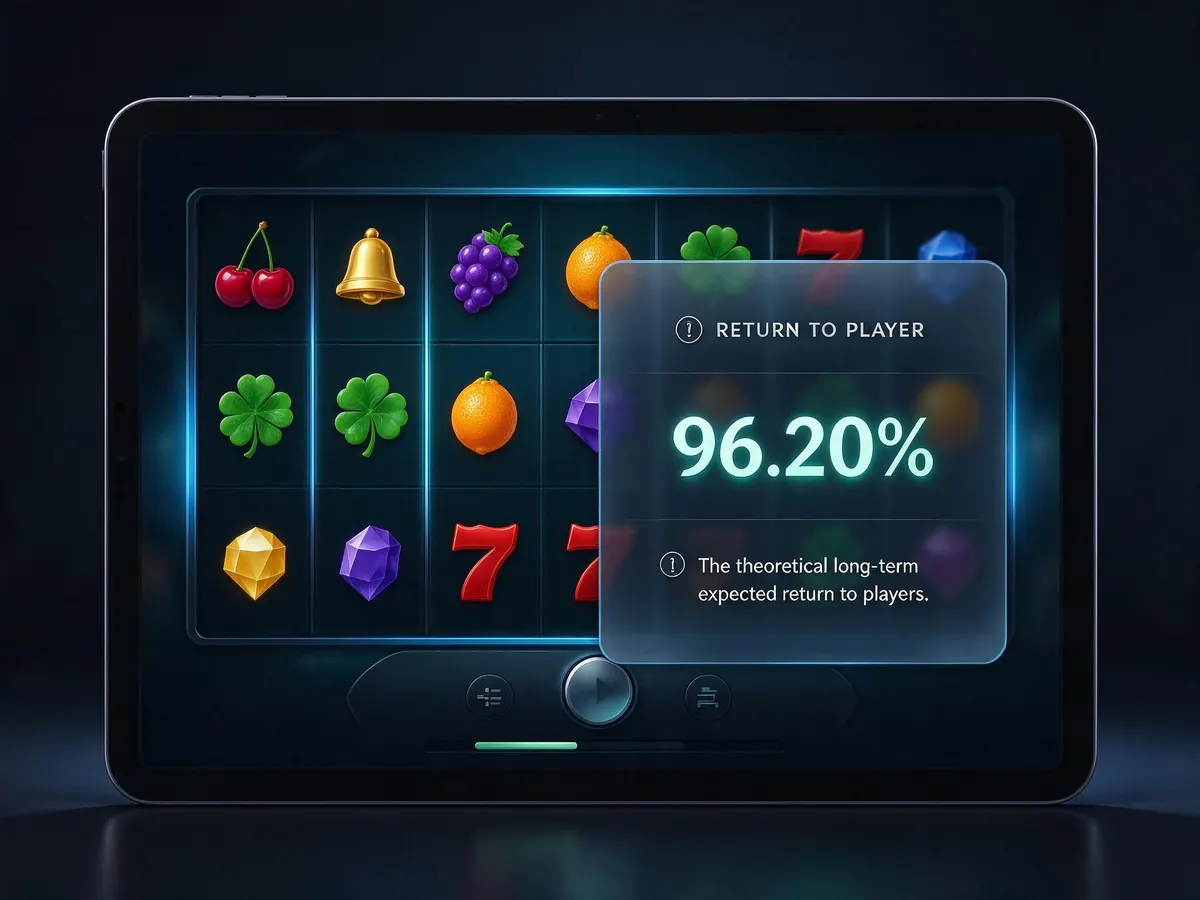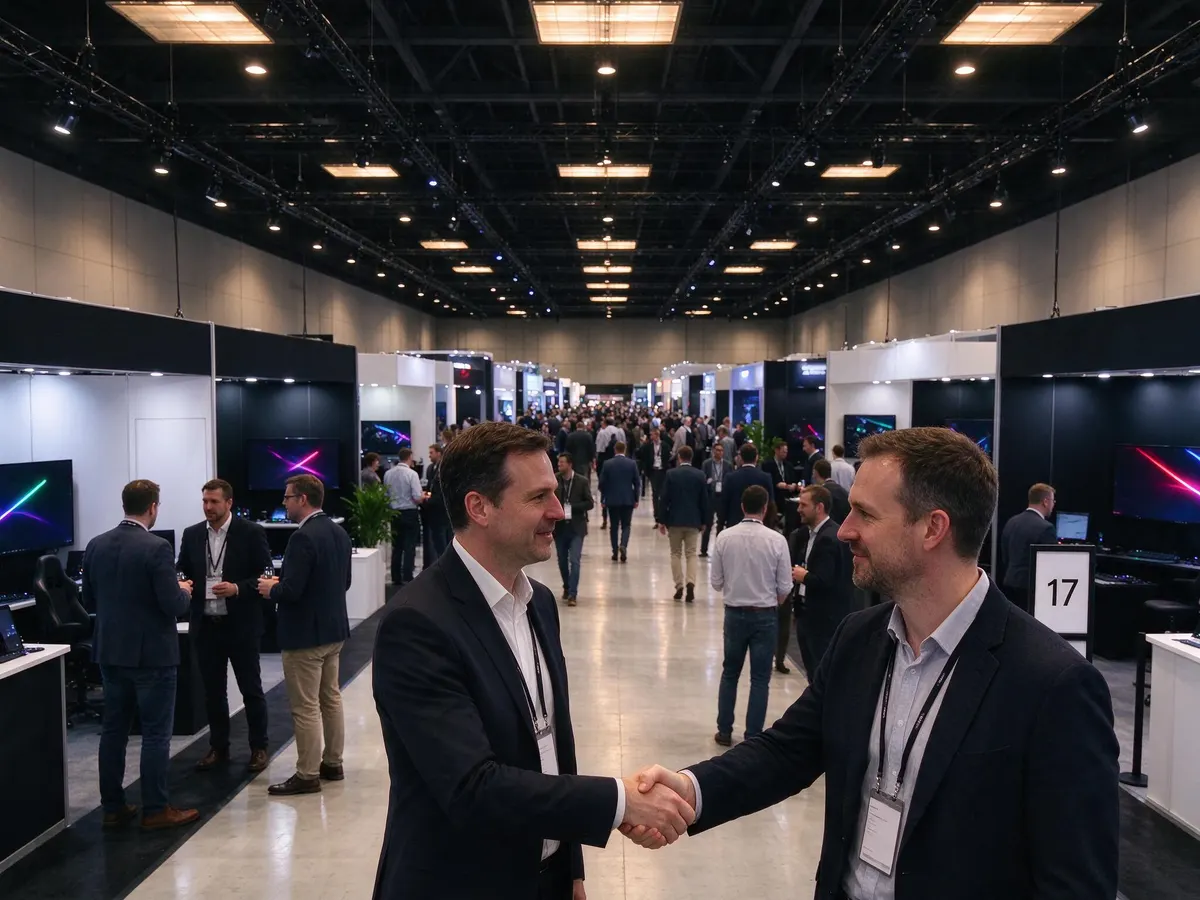

An esports betting arena, in supplier marketing, is a trade-show stand built to look and feel like a competitive gaming venue: screens, seating, leaderboards, a demo stage. GR8_TECH is bringing one back for a second year at SiGMA World in Rome, from 2 to 5 November, at booth H4-4038. That much is confirmed. What is not confirmed, and what a lot of readers will assume anyway, is that any of it is about esports wagering.
Read the announcement line by line and the product spotlight goes somewhere else entirely. The two things GR8_TECH is putting in front of buyers are Fastbook, its sportsbook frontend, pitched on an average load time of 1.72 seconds and billed as the fastest on the market, and GREAT_WHITE LABEL, a route into LATAM with launches advertised in as little as three weeks. Neither is an esports odds product. The arena is the packaging.
What is actually confirmed for Rome
The second edition of Champions Arena is a stand concept with a product showcase, a demo schedule staffed by GR8_TECH product experts, an outdoor lounge in the street area for conversations off the exhibition floor, and a private fine-dining track for selected guests. GR8_TECH also picked up Silver for Platform Provider of the Year at the SBC Awards at SBC Summit Lisbon 2026, which is the credential the stand is trading on.
| Detail | Confirmed |
|---|---|
| Event | SiGMA World 2026, Rome |
| Dates | 2 to 5 November |
| Booth | H4-4038 |
| Headline product | Fastbook frontend, 1.72s average load time |
| Second product | GREAT_WHITE LABEL, launch from three weeks, LATAM focus |
| Award | Silver, Platform Provider of the Year, SBC Awards at SBC Summit Lisbon 2026 |
| Hospitality | Outdoor street-area lounge, private dining for selected guests |
Those are the figures a buyer can hold a supplier to. Everything else in the announcement is atmosphere.
The misreading, and what it costs
The widespread misreading is that an esports-themed arena returning for a second edition is evidence that suppliers are pouring investment into esports betting as a vertical. It is not. It is evidence that esports aesthetics work as a way to get operator decision-makers to stop walking past a stand in hall four. Arena staging, leaderboards and competitive framing are attention architecture aimed at B2B buyers, not a product roadmap for GR8_TECH‘s odds offering.
The cost of confusing the two falls on operators doing roadmap planning off conference signals. If you come back from Rome convinced that esports wagering is where platform spend is heading, you start budgeting for esports odds depth: more titles, deeper in-play markets, tournament coverage across tiers, the trading and data-feed infrastructure underneath it. That is a genuinely expensive build. Esports pricing is not sports pricing with different team names. Market coverage depends on third-party data feeds of varying quality, in-play pricing on titles like CS2 or Dota 2 moves on objective states that need specialist modelling, and integrity exposure at lower-tier events is a real trading risk, not a theoretical one.
Meanwhile the two numbers GR8_TECH chose to lead with say the buyers in that room are being sold something else: frontend load speed and time to market. A 1.72 second average load and a three-week white label launch are both operations metrics. They are the asks of operators who want to open a LATAM brand this quarter and stop losing users on a slow betslip. Chase the esports narrative and you fund the wrong quarter.
Where the arena framing does tell you something real
The esports styling is not meaningless. It points at an audience overlap suppliers have been circling for a while: the bettor who arrived through competitive gaming rather than football, and who expects the product conventions of games rather than of a betting shop. Progress bars, missions, leaderboards, tiered status, instant feedback on every action. That is gamified betting, and it is a front-end and engagement question, which is exactly the layer Fastbook sits in.
Seen that way, the arena and the product spotlight are consistent rather than contradictory. An operator courting esports-fan bettors does not necessarily need 400 esports markets on day one. It needs a frontend that loads like an app, cash-out that responds immediately, and session design that feels familiar to someone whose reference point is a game client. Esports odds breadth is the second decision, not the first.
The honest caveat: nothing in the announcement quantifies any of this. There is no turnover figure for esports wagering, no player-cohort data, no claim about how much of the Fastbook build serves esports audiences specifically. A second edition of a stand concept tells you the first edition generated enough pipeline to repeat. It does not tell you the size of the vertical behind it.
What to ask at booth H4-4038
If you are walking the floor with a buying mandate rather than a camera, the arena is a backdrop and the demo is the meeting. Useful questions, in rough order of how much they protect you:
- What is the 1.72 second figure measured on: which device, which network, which market, cold or cached?
- Does the three-week GREAT_WHITE LABEL timeline include licensing and payment integration, or start after they clear?
- Which esports titles are priced in-house versus taken from a feed, and who carries the liability when a feed fails mid-match?
- What does the gamification layer actually control: display only, or bonus and mission logic that touches the wallet?
- How do player protection tools behave inside those engagement loops, and can limits, reality checks and self-exclusion be enforced at the platform level rather than per-brand?
That last one is worth pressing on. Gamified formats are designed to extend sessions, and anything that extends sessions needs deposit limits, loss limits and cool-off tools wired in at the same depth as the leaderboards. Operators who treat player protection as a compliance bolt-on after launch tend to rebuild it under regulatory pressure later, at worse cost.
The test is next year, not this one
What remains genuinely open is whether Champions Arena turns into a recurring fixture that eventually carries an esports product rather than esports branding. Two editions is a pattern of marketing, not of investment. The thing to watch at the next cycle of shows is simple: whether the product spotlight inside the arena is still a frontend and a white label, or whether esports odds, trading and market coverage finally move from the stand design onto the spec sheet. Until that switch happens, treat the arena as what it is. A very good way to get a meeting.