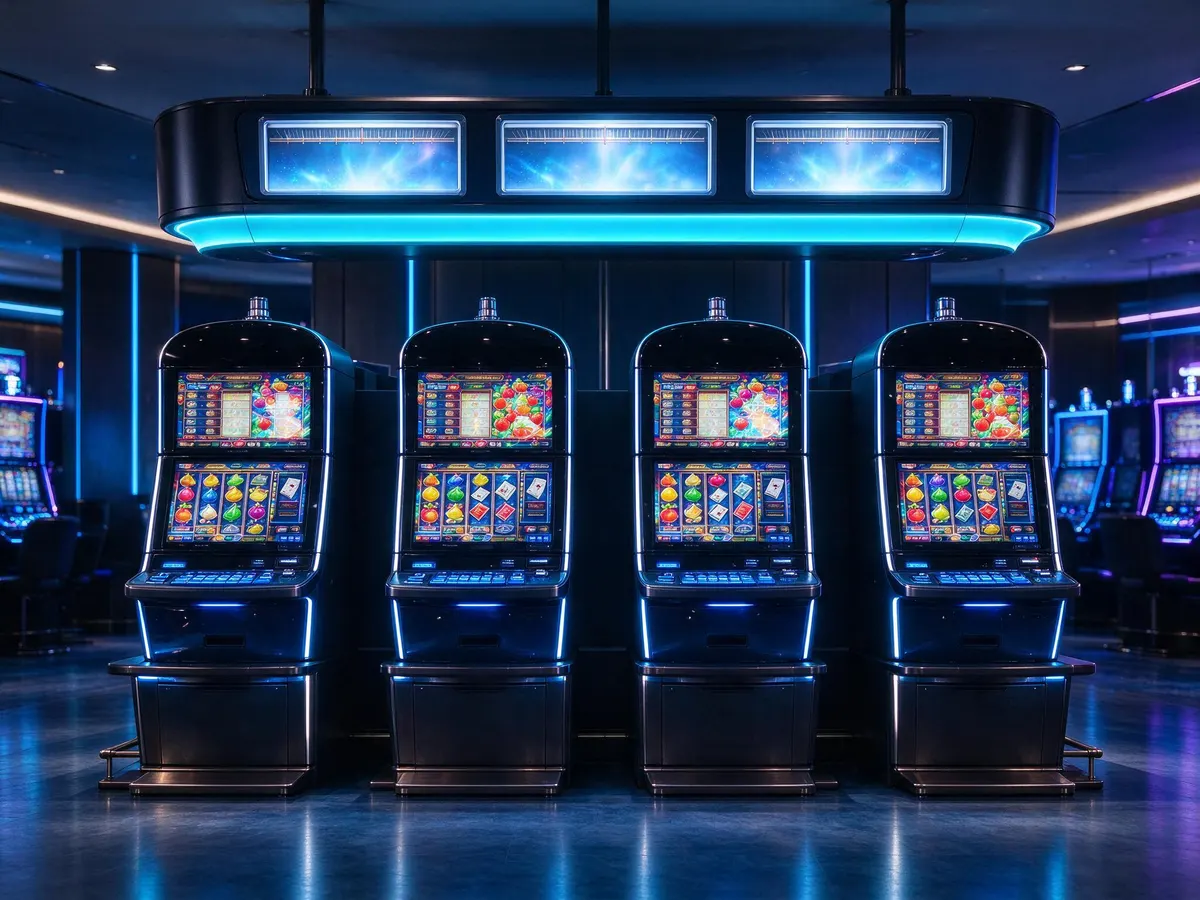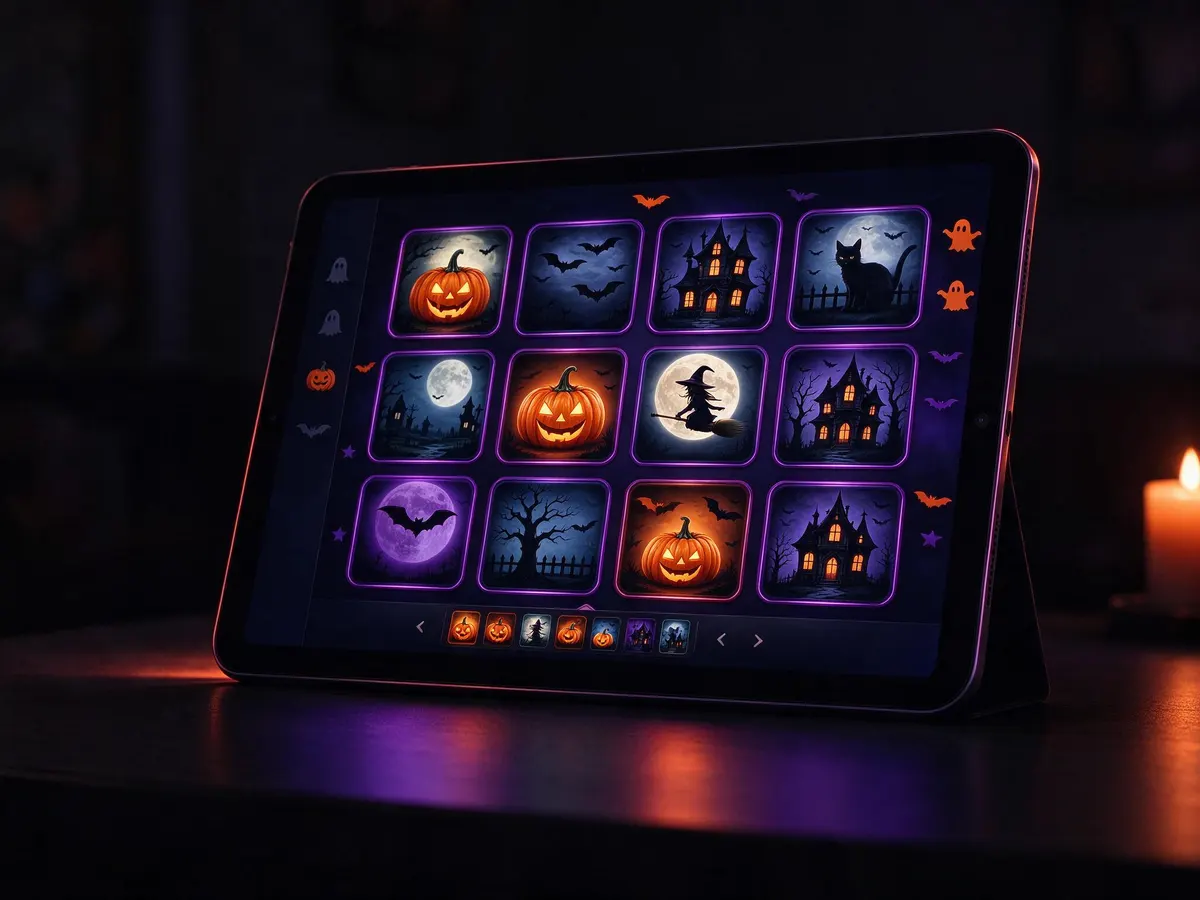
The October takeover: why Halloween-themed slots own the lobby
Noticed your casino lobby suddenly looks like a haunted house? That is not coincidence or a one-off stunt. Halloween-themed slots appear every October because seasonal reskins are one of the cheapest, most reliable ways for an operator to refresh a lobby and give players a reason to log back in. The theme changes. The underlying commercial logic does not.
This year’s headline example is BetMGM’s LegendSCARY campaign, reported by G3 Newswire as the company’s biggest seasonal casino campaign of the year. It is a useful case study, not because BetMGM invented the idea, but because it shows the full playbook running at once: an exclusive themed game, promotions, leaderboards and a hard end date. Understand that playbook and you can judge every spooky slot that lands in your lobby, this October and the next.
BetMGM’s LegendSCARY, and what the report actually says
LegendSCARY is a month-long Halloween campaign on BetMGM Casino, running through Sunday, 1 November. That is the extent of what has been publicly reported, and it is worth being precise about it, because seasonal campaigns attract a lot of secondhand embellishment.
What the campaign reportedly includes
According to G3 Newswire’s report, LegendSCARY combines a Halloween version of a popular casino title, spooky-themed promotions, sweepstakes, leaderboard competitions and player rewards. The campaign draws on BetMGM’s existing “Make It Legendary” brand platform. Oliver Bartlett, Senior Vice President of Gaming at BetMGM, is quoted saying that Halloween “lends itself perfectly to casino entertainment” and that the month was built around discovering a new game, climbing a leaderboard or unlocking rewards.
What the report does not say is just as relevant. It does not name the exclusive title’s RTP, its volatility rating, its maximum win multiplier, or the wagering terms attached to any of the promotions. I am not going to guess at those numbers, and neither should any article you read about this campaign. If you want them, they live in the game’s info screen and the promotion’s terms page, not in a press release.
One practical note: BetMGM operates in licensed US markets. If you are reading from India or anywhere outside those states, this campaign is not available to you. Treat it as an illustration of how the industry behaves, not an offer.
Why operators rebuild the lobby every October
Seasonal theming solves a retention problem cheaply. A casino lobby that looks identical in October and February gives a lapsed player nothing to come back for. A themed takeover manufactures novelty without the cost and risk of building genuinely new games.
Four things make October particularly attractive:
- Horror is already a shared visual language. Nobody needs a tutorial to understand a pumpkin, a bat or a haunted mansion, so the marketing does less explaining.
- The deadline is built in. Halloween ends, so a campaign can carry genuine time pressure without the operator inventing an artificial one. Urgency drives sessions.
- Reskinning proven mechanics is cheap. Studios take a game whose math already performs and dress it in cobwebs. Development cost is a fraction of a new title.
- Leaderboards and sweepstakes layer on top. The campaign structure, not the slot itself, is often what actually increases how long players stay.
That last point is the one most coverage misses. The exclusive game is the poster. The leaderboard and the reward schedule are the engine.
What horror and Halloween slots usually have in common
Across the genre, Halloween slots lean on a recognisable set of conventions: dark art direction, scatter-triggered free spins, escalating multipliers, and increasingly a bonus buy option where regulation allows it. These are genre habits, not promises. No individual title is obliged to include any of them.
Bonus rounds and free spins
Most horror-themed slots build toward a feature round, usually triggered by three or more scatter symbols. Free spins frequently come with a sweetener, such as a multiplier that climbs with each win or wilds that stay locked in place. Where bonus buy is offered, you pay a large multiple of your base stake to skip straight to the feature. Buying does not improve your long-run position; it compresses the same expected outcome into fewer, larger-variance rounds, and in many markets the feature is not permitted at all.
Visual and audio theming
Sound design does more work than most players realise. Low drones, sudden stings, a scream on a near miss. None of it touches the math model, but it is deliberately built to make near misses feel like events. Being aware of that is not cynicism, it is just knowing what you are looking at.
Licensed horror versus original monsters
Some seasonal slots license recognisable horror properties; most invent their own vampires and witches because licensing costs money and limits creative control. A licensed name tells you the studio paid for brand recognition. It tells you nothing about the payback percentage.
Does a Halloween theme change your odds?
No. A slot’s theme is artwork and audio layered over a math model, and RTP and volatility are set in that math model, not by the skin. A pumpkin symbol pays what the paytable says a pumpkin symbol pays, exactly as a cherry would in the same position.
Two numbers describe the model. RTP, return to player, is the share of total wagers a game returns over millions of rounds. Most slots sit somewhere around 94% to 97%, which is the same as saying the house edge is roughly 3% to 6%. Volatility describes how that return is distributed: high volatility means rarer, larger wins; low volatility means smaller, more frequent ones. Volatility never changes RTP, and neither does a new coat of paint.
The one real complication is that the same slot can ship in several RTP configurations, and the operator chooses which one it runs. So the number you read on a review site may not be the number in your lobby. The figure in the game’s own info screen is the one that applies to you.
| Element | What it affects | What it does not affect |
|---|---|---|
| Theme and artwork | Appeal, discovery, how long you play | RTP, hit frequency, payouts |
| Volatility rating | Swing size and win frequency | Long-run RTP |
| Bonus buy | Variance and pace of play | Long-run house edge in your favour |
| Max win cap | Ceiling on a single round’s payout | Your chance of reaching it |
A five-step check before you spin a seasonal slot
Run this in order. It takes about two minutes and it is the same process whether the game is themed for Halloween, Christmas or nothing at all.
- Open the info or paytable screen and read the published RTP. Use the number shown in the client, not a number from a review.
- Find the volatility rating and the hit frequency if listed. Match them to your bankroll and your patience, not to the trailer.
- Check the maximum win, usually expressed as a multiplier of your stake, and note that it is a cap rather than a target.
- Read the terms on any linked promotion: wagering requirement, game weighting, max bet while the bonus is active, max cashout, and the expiry date. A 30x requirement on a ₹1,000 bonus means ₹30,000 wagered before withdrawal.
- Confirm the operator’s licence and that it covers your jurisdiction. If a campaign is restricted to specific licensed markets, no workaround makes it legitimate for you.
If step one or step four is hard to find, that itself is information.
The trade-off nobody resolves for you
Here is the honest tension. Seasonal campaigns can carry real added value: leaderboard prize pools and reward drops are money that would not otherwise be on the table. They also arrive wrapped in a deadline, and a deadline is designed to make you play at a pace you did not choose. Those two facts do not cancel out, and I cannot tell you where the line sits for your bankroll.
What I would not do is let the end date set my stake size. A promotion worth claiming on 3 October is still worth claiming on the terms you would have accepted on 3 October, not at triple the bet on 31 October because the clock is running out.
Set a budget before you open the lobby, use deposit and session limits, and remember that every one of these games carries a house edge regardless of how good the artwork is. The spooky skin is marketing. The math underneath was decided long before anyone drew the pumpkin.