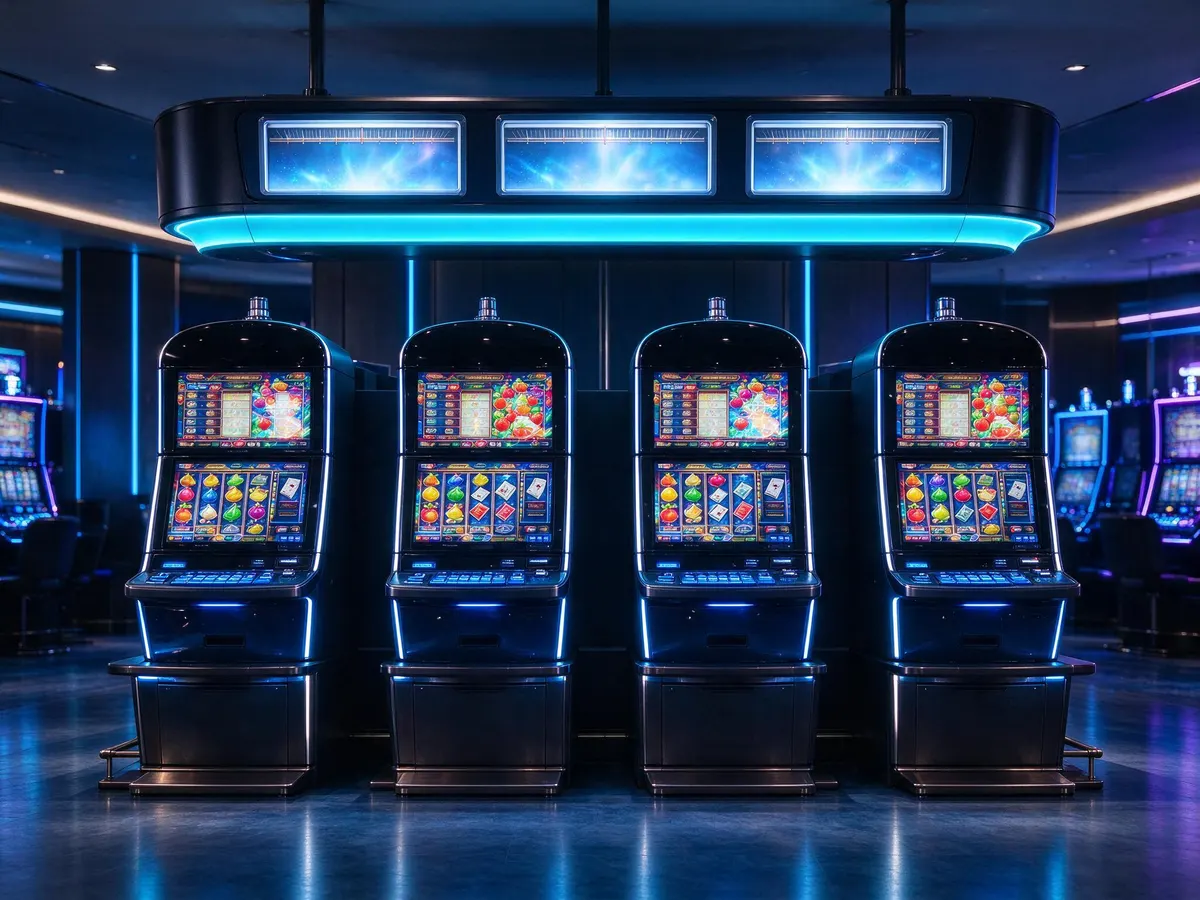

The myth: a refreshed lobby means tighter slots
Swapping games in and out of a lobby does not change the odds of any game in it. Seasonal casino game updates are a merchandising and licensing exercise, not a dial in the back office. A slot’s return to player sits inside a certified build held by the provider, and an operator deciding to feature a pumpkin-themed title in October has no access to it. If your usual game felt colder the week after a new batch landed, the refresh and the cold run shared a calendar, nothing more.
The reassurance needs one qualification, though, and it is the part most guides skip: some studios ship the same title in more than one certified RTP configuration, and the operator chooses which one it integrates. That is a real mechanism, and it is worth knowing about before you assume rotation is purely cosmetic. I come back to it below, with what it does and does not justify suspecting.
What seasonal game rotation actually is
Seasonal rotation is the scheduled addition and removal of themed games and the promotions attached to them, timed to calendar events and to the release calendars of the studios an operator works with. In practice that means harvest and Halloween slots in autumn, Christmas and winter titles in December, and Diwali or Holi themed releases in markets where those festivals drive play.
Rotation covers more than slot art. It usually bundles a promotional layer on top: seasonal free spin drops, themed tournaments, limited-time cashback. On the live side it can extend to the physical studio. Stanislav Kriuk, Production Director at ICONIC21, has described seasonal set changes in live casino studios as work planned weeks ahead, installed table by table during maintenance windows, then signed off with camera, lighting and sound checks, with fire safety, ventilation and emergency access maintained throughout. Decorations that look fine in the room can read badly through a camera, so the testing is not decorative.
Why disciplined operators do not leave the lobby static
Four drivers sit behind most refresh cycles, and only one of them is marketing.
Novelty and retention is the obvious one. Players browse; a lobby that looks identical in June and December gives a returning player nothing to look at. Second, provider release schedules: studios publish new titles on their own cadence, and an operator that wants the current catalogue has to keep integrating. Third, housekeeping. Every integrated game carries maintenance overhead, and titles that nobody opens still occupy lobby space and still need to work after each platform update, so underperformers get retired.
Fourth, and least visible, compliance. In regulated markets a game typically has to be certified for that jurisdiction before it can go live, and licence conditions, supplier agreements and testing documentation all have renewal dates. A refresh cycle is a natural moment for that paperwork to be reviewed. How tightly those two cycles are coupled varies by regulator and by operator, so treat any claim that a refresh proves a licence review happened as unverified unless the operator documents it.
That also answers the cadence question, honestly: there is no published industry standard for how often a library should change, and no regulator mandates a number. Anyone quoting you a precise figure for the average monthly additions across the market is guessing. What you can observe is whether additions and removals happen at all, and whether they are explained.
What rotation reveals about the back end
A library that changes cleanly every season implies a set of processes that players never see. Each new title needs a signed agreement with the studio, a technical integration, and testing on the operator’s own platform across desktop and mobile before release. Bonus rounds, autoplay, currency handling and the game’s info screens all have to behave after integration, not just in the provider’s demo.
Certification sits alongside that. Independent testing laboratories assess RNG behaviour and verify that a build returns what its paytable claims, and those certificates are issued per build and per market, which is why the same title can be live in one jurisdiction and absent in another. Support has to scale too: a new mechanic generates a wave of “why did my free spins end” tickets, and agents who have not been briefed on it will handle them badly.
None of this is glamorous, which is the point. An operator that can add fifteen titles in a month without breaking its wagering tracking is demonstrating the same discipline it would need to process your withdrawal correctly. The inverse holds less reliably: a stale library is weak evidence of a weak back end, because a small operator with a narrow licensed catalogue may simply not have much to add.
Does rotating games change the odds?
No, with one exception you can check yourself. An individual game’s RTP and RNG are properties of the certified build the provider supplies, tested and sealed before it reaches any lobby. Removing a game from the lobby does nothing to the games that remain. Adding one does nothing either; the new title simply arrives with its own figures.
How RTP and RNG certification work when a game is added or removed
The exception is configuration. Several studios publish titles in multiple certified RTP versions, for example a flagship build and lower-return variants, and the operator selects one at integration. So a game you played at 96% elsewhere can legitimately run at a lower certified figure in another lobby, and in principle a title could return after a seasonal gap on a different configuration. That is not manipulation; it is disclosed in the game’s own information panel, which is exactly where you should look. What nobody can tell you is how common the practice is in any given market, because operators do not publish those choices in aggregate. I am not going to attach a percentage to it.
The suspicion that a refresh made games “tighter” usually traces to something simpler: variance. At 96% RTP the house edge is 4%, and that average emerges over millions of rounds, not over your Saturday evening. A hundred spins tell you almost nothing. Results are independent round to round, so a game does not cool down because it paid last week or because the lobby around it changed.
| What a seasonal refresh changes | Who controls it | Effect on your odds |
|---|---|---|
| Which titles appear in the lobby | Operator | None on existing games |
| Seasonal promotion and wagering terms | Operator | None on RTP; changes the value of the offer |
| Which certified RTP version of a title is integrated | Operator, from the provider’s options | Yes, and it is stated in the game info panel |
| RNG behaviour within a game | Provider, verified by testing labs | None |
| Live studio sets and presentation | Studio and operator | None |
Signs a casino manages its library professionally
Five things are visible from the front end without creating an account:
- Dated update notes or a new games feed showing what arrived and when
- Licence details in the footer, with a number that resolves on the regulator’s own register
- Named providers on every game tile, not an unattributed grid
- Testing or audit seals that link somewhere verifiable rather than sitting as flat images
- Full promotion terms published at the same time as the seasonal offer, including wagering multiple, game weighting, max bet and max cashout
- Game info panels that state RTP and volatility for each title
The promotion terms matter most. A seasonal free spins drop with a 40x playthrough and a capped cashout is a thinner offer than a standing 25x bonus, and an operator that publishes both sets of terms side by side is not hiding the comparison.
Caution signals, including the quiet kind
A library frozen for a year is worth noticing, but silence around changes is the stronger signal. Watch for promotion terms that are edited after launch without a revision date, games that vanish mid-session with no notice or explanation, provider names stripped from tiles, and audit badges that are images rather than links. A title disappearing is often innocent, a licensing agreement lapsing or a market certification expiring, but an operator that cannot say which is not managing the communication side of its catalogue.
None of these prove misconduct on their own. Read them as reasons to check the licence register before depositing, not as a verdict.
When your favourite game disappears, or a new one shows up
Do three things before playing the replacement. Open its info panel and read the stated RTP and volatility, because that is where a different configuration becomes visible. Confirm the provider name against a studio you recognise. Then read the seasonal promotion terms in full, applying the same scrutiny you would to a permanent offer, since limited-time campaigns are where tighter wagering and lower cashout caps most often appear.
If the game is simply gone, check whether the provider has delisted it across the market before concluding anything about the operator. Many removals are contractual, and they happen at the studio end.
One practical note: set deposit and session limits before a seasonal campaign starts, not during it. A refreshed lobby is designed to be interesting, and interest is not a reason to raise a limit or to recover a losing run. If limits, cool-off or self-exclusion tools are hard to find on a site, that absence tells you more about the operator than its game count does.
Where this leaves you is with a decision rather than a score. Rotation on its own proves very little; rotation that is dated, attributed, certified and explained is a reasonable proxy for a back office that works. Treat the lobby as one input, verify the licence number yourself, and let the clarity of the terms decide the rest.