
Eight brands, one studio, one signature
Eight casino brands picked up the same slot catalogue from a single agreement. Trade outlet iGaming Business reported on 13 October 2026, with coverage also carried by SCCG Management and Casino City Times, that Just Slots, an iGaming content provider, had signed with Wildz Group to bring its original titles to eight operator brands, among them Wildz Casino, Blingi and Spinz. If you play at two of those eight sites and thought you were browsing two different libraries, you weren’t. That is the practical reality behind most so-called exclusive slot games: the exclusivity, where it exists at all, is granted to a network of sister brands rather than to one website.
Which means the thing a lot of casino review pages tell you with total confidence, that an exclusive title is your reason to sign up here rather than there, is usually overstated. Let me walk through this particular deal, because it shows every moving part clearly.
What the Just Slots and Wildz Group deal actually covered
According to the iGaming Business report, Just Slots partnered with Wildz Group in its first major agreement under the Malta Gaming Authority B2B licence it had secured the previous month. The deal gives Wildz Group’s brands access to Just Slots’ original titles, with releases named in the report including Sugar Heaven, Dynamo’s Show and Shogun Skylord. The headline figure was eight operator brands.
Read that again and notice a word that isn’t there. The announcement describes original content, meaning games Just Slots developed itself rather than licensed in. It does not say those games are locked to Wildz Group, and nothing in the report suggests other operators are barred from carrying them. Original and exclusive are different claims, and they get collapsed into one constantly, usually in marketing copy rather than in the actual press release. I would not treat any slot as exclusive to a casino unless the operator states the arrangement and its duration in plain terms.
What “exclusive” actually buys in exclusive slot games
Exclusivity in slot content is nearly always granted at the studio-to-group level, not the studio-to-single-site level. A content provider signs with a company that owns several consumer brands, and every brand under that corporate roof gets the catalogue. From the outside you see eight casinos. Commercially, there was one counterparty.
Here are the arrangements you’ll run into, and how each looks from the player side:
| Arrangement | Who can offer the game | Typical duration | What you notice |
|---|---|---|---|
| Single-brand exclusive | One website only | Rare, usually short | Genuinely one place to play it |
| Group or network exclusive | Every brand under one operator group | Months | Same “exclusive” game on several sites |
| Timed exclusive | One group first, then wider release | Weeks to a few months | Early access, then it spreads |
| Open distribution | Any operator licensing the studio or aggregator | Ongoing | The game is everywhere |
Most titles sold as exclusive sit in rows two and three. That is not deception on the operator’s part, it is how the contracts are written. The deception, if there is any, happens later, when an affiliate page turns “group exclusive for ninety days” into “only at this casino”.
How slot aggregators move a game onto eight sites at once
A slot aggregator is a middleman that licenses game catalogues from many studios and distributes them to operators through a single technical integration. Instead of a casino building a separate connection to each of forty studios, it connects once to the aggregator and inherits hundreds or thousands of games, with the aggregator handling the game feeds, reporting and much of the compliance plumbing.
Studios also deal with operators directly, as Just Slots did here. Either way, the bottleneck is the same: integration work. Once a studio’s games are live on a platform, adding them to another brand running on that same platform is close to a configuration change. Operator groups deliberately build this way, with shared back-end infrastructure, shared wallet and reporting systems, often a shared licence. A group that has solved integration once can light up a new title across its whole stable in a single release cycle.
That is the mechanical answer to why slot content providers prefer group deals. One negotiation, one integration, eight shopfronts’ worth of distribution. A single-site exclusive gets a studio a smaller audience for roughly the same engineering effort, which is why those deals are rare and usually short.
Why new slot releases land everywhere in the same week
Simultaneous multi-site launches are now the industry default, not a warning sign. When you see the same new release headlining five casinos’ lobbies on a Tuesday, the ordinary explanation is that those casinos share an owner, a platform, an aggregator, or all three.
Shared groups versus genuinely independent competitors
The distinction worth holding onto is between brands that are siblings and brands that are rivals. Sibling brands under one operator group will have near-identical game portfolios, often identical bonus structures and the same support team behind a different logo. Unrelated operators can still carry the same games, because they both license from the same studios or aggregators, but their terms, limits and payout handling are set independently.
So catalogue overlap alone tells you nothing about ownership. It is common to both cases. What tells you something is the combination: identical lobbies plus identical terms plus the same company name in the footer.
What a content partnership signals, and what it doesn’t
A deal like this is weak positive evidence about an operator and nothing stronger. It says the group has budget, has relationships on the supply side, and is actively refreshing its catalogue rather than coasting on a static library. The Just Slots side of it carries a bit more weight, in that the studio had obtained an MGA B2B licence before signing, which means a regulator had assessed it as a supplier.
Here is what it does not tell you. It does not tell you whether withdrawals are processed in two days or twelve. It does not tell you how the operator handles a disputed bonus, whether support answers after midnight, or how aggressively the terms cap your cashout. Content deals are announced because they are good news for the operator’s commercial team. Payout performance is not announced at all, which is precisely why it matters more.
Online casino game variety is also easy to overcount. A group with eight brands and 3,000 games per brand does not offer 24,000 games. It offers roughly 3,000, eight times over.
How to check whether two casinos are really two casinos
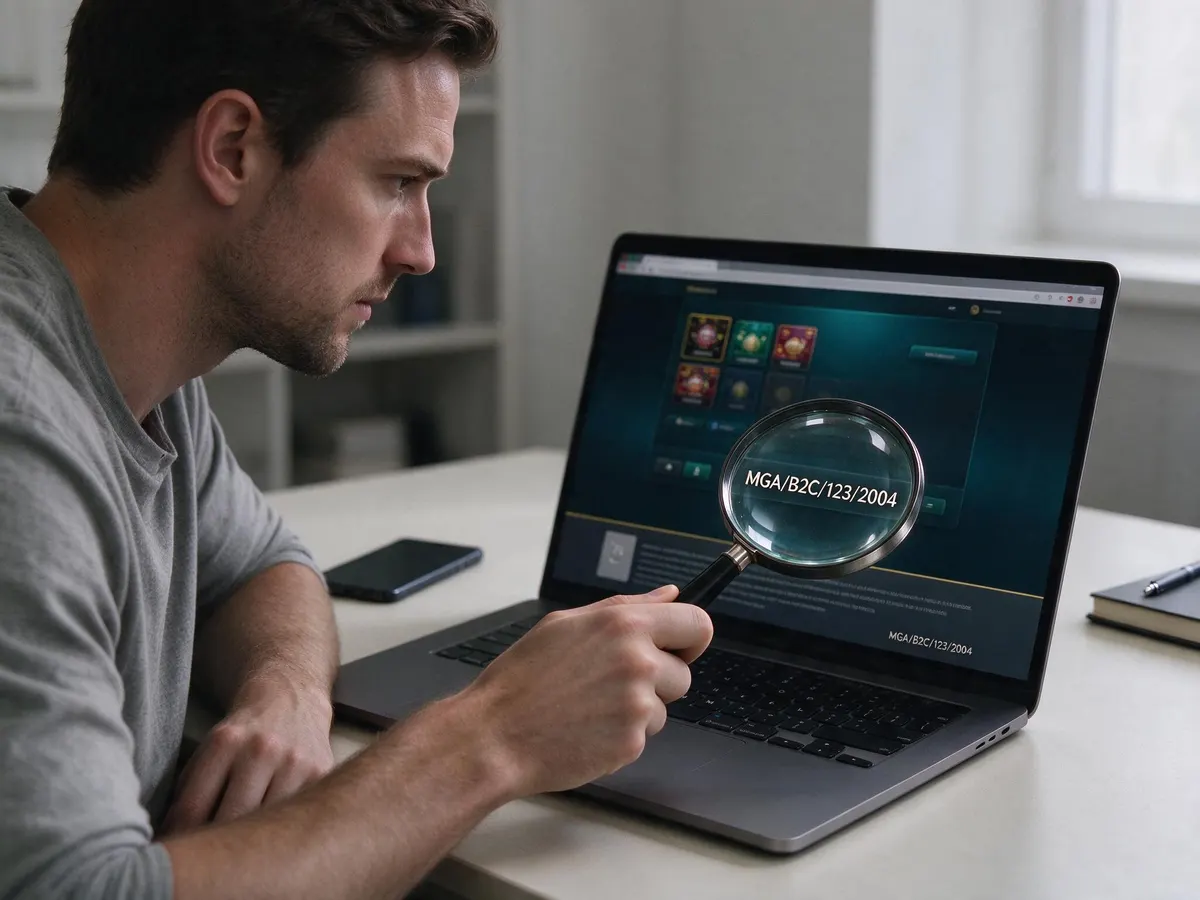
Scroll to the footer before you deposit. Licensed operators must name the company holding the licence and its licence number, and sister brands will share both. Then cross-check the number on the regulator’s own register. The Malta Gaming Authority, for example, publishes a searchable list of licensees and the brands operating under each licence, and most reputable regulators do the same. Two “different” casinos resolving to one licensee are one casino with two wardrobes.
Other quick tells: identical terms and conditions wording, the same payment provider descriptors on your bank statement, the same lobby layout and filter menus, and promotions that move in lockstep.
What to verify yourself, regardless of who makes the games
- Licence status, confirmed on the regulator’s register rather than on the casino’s own badge image.
- Independent RNG and game testing certification for the titles you play, which comes from the studio’s testing lab and the operator’s compliance obligations, not from the commercial content deal.
- The RTP shown on the game’s own information screen. Some studios ship a title in more than one RTP configuration and let the operator choose, so the same game name can carry a different long-run return on two sites. Check the number in the paytable, not the one in a review.
- Withdrawal terms: processing times, verification requirements, and any maximum cashout attached to a bonus.
- Wagering requirements and game weighting, since slots usually contribute 100% while table games contribute far less.
Read our explainers on how RNG and RTP certification work and on choosing a licensed online casino if you want the detail behind those checks.
The part the announcement was never going to cover
Multi-brand content deals are routine across the industry, and the Just Slots agreement with Wildz Group is an unremarkable example of a very normal structure. It is good for the studio, convenient for the group, and essentially neutral for you. A new slot arriving on eight sites at once is a distribution fact, not a quality signal.
What stays genuinely open is the thing no press release addresses: whether the operator hosting the game treats you well when something goes wrong. That you find out from the licence register, the terms, and the payout record. Every slot keeps a mathematical house edge whichever brand serves it, so set a deposit limit, treat the spend as entertainment, and use the regulator, not the lobby, as your reference point.