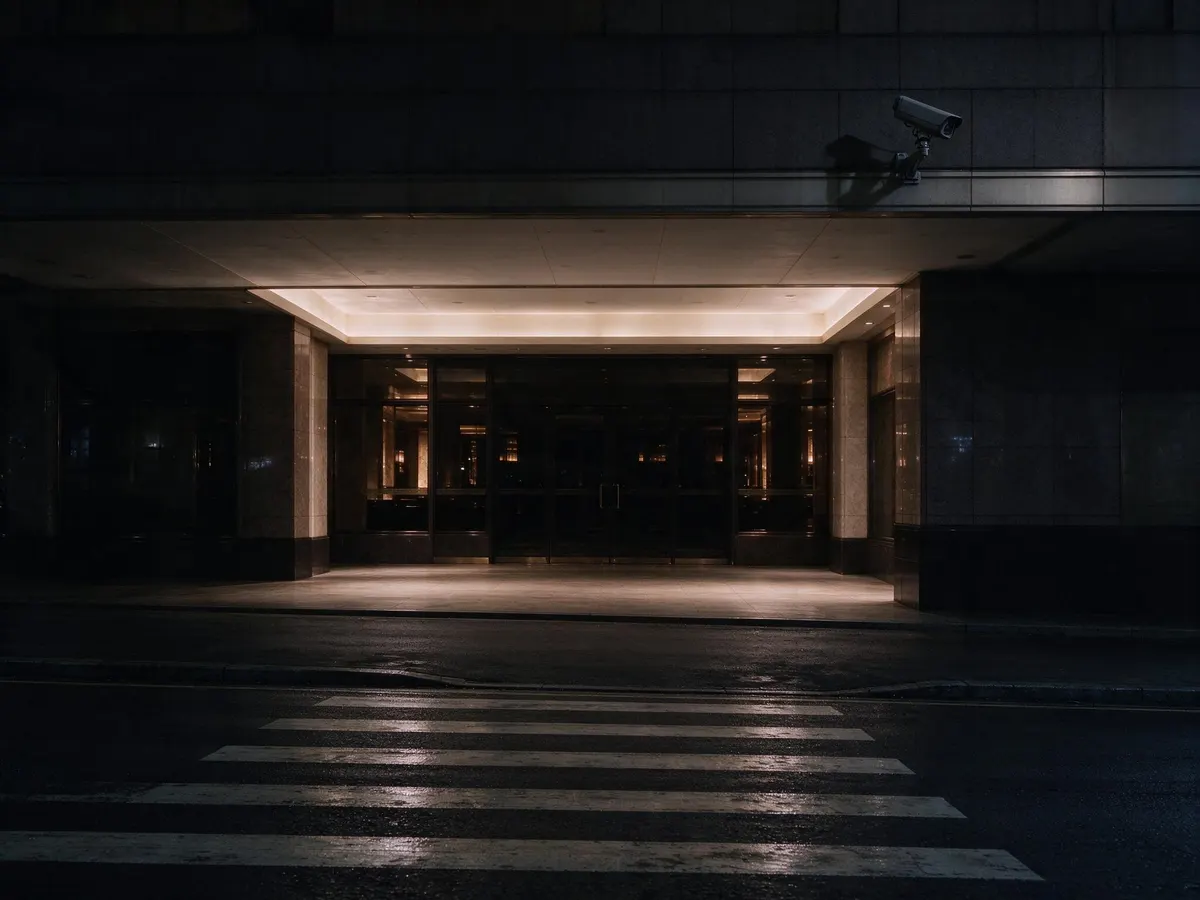
A crosswalk just outside the doors
The gunfire at Kickapoo Lucky Eagle Casino did not happen at a blackjack table or near the cage. It happened shortly before midnight on 27 September 2025, near a crosswalk outside one of the entrances, which is precisely the spot where most casino security measures thin out. Seven people were shot. Two died. Witnesses described patrons diving beneath tables and running for exits.
The Eagle Pass venue is owned by the Kickapoo Traditional Tribe of Texas. A promotional giveaway of a Mercedes-Benz E350 had been advertised at the property for Saturday 13 September 2025, two weeks before the shooting, and there is no evidence a similar raffle was running on the night of 27 September. Alicia “Daniela” Sanchez, 30, a mother of five, was walking to her car with her longtime partner after an evening of gambling. Marcus “Mark” Antley was a retired US Customs and Border Protection agent known across Eagle Pass. Both were killed. Five others were taken to hospitals in Eagle Pass and San Antonio.
Hold on to the geography, because the rest of this piece depends on it. The building was almost certainly one of the most heavily monitored structures in Maverick County. The crosswalk outside it was not the same thing.
What the court record says, and when it moves
Keryan Rashad Jones, 35, of San Antonio, is scheduled to stand trial on 8 February 2027 in Maverick County, almost 17 months after the attack. He is charged with capital murder of multiple persons, murder, and aggravated assault with a deadly weapon. He has pleaded not guilty and remains in custody on $5.1 million bail.
Prosecutors have said they will not seek the death penalty. Under Texas law, that makes a capital murder conviction carry a mandatory sentence of life imprisonment without parole. The defence has pursued the mental health route: after the January arraignment, conducted by video link, Jones’s attorney requested evaluations of both his competence to stand trial and his sanity at the time of the shooting. In May, 293rd District Court Judge Maribel Flores found him competent and ordered a separate evaluation of his sanity at the time of the alleged offences.
| When | Development |
|---|---|
| 27 Sept 2025 | Shooting outside the casino shortly before midnight; seven shot, two killed |
| 28 Sept 2025 | Suspect’s pickup intercepted in Wilson County; arrest follows a pursuit |
| Six days later | Casino reopens with heightened security |
| January 2026 | Not-guilty plea entered by video link; psychological evaluations requested |
| May 2026 | Judge rules Jones competent to stand trial; sanity evaluation ordered |
| 8 Feb 2027 | Trial scheduled in Maverick County |
That calendar is worth noticing on its own. Serious casino crime incidents generate a week of coverage and then disappear into a docket that moves in six-month increments. By the time a jury is seated, the venue has been operating normally for well over a year.
What casino security measures are actually designed to catch
Casino surveillance systems are built first around money and game integrity, not around personal safety in the parking lot. In US casinos, the regulatory minimum standards for surveillance are written around gaming areas, the cage, the count room and the drop: the places where chips, cash and dispute resolution live. That is why the “eye in the sky” is dense over a craps pit and sparse at the far edge of a lot.
Everything the industry is famous for follows from that priority. Overlapping camera angles on every table so a disputed payout can be replayed frame by frame. Dedicated surveillance staff who watch dealers as closely as players. Logged, time-stamped footage retained for a fixed period. Controlled access to the count room. None of that was designed to stop a shooting at a crosswalk, and it is not fair, or accurate, to say it failed at a job it was never given.
Here is the gap a reader should carry away. When a venue describes itself as having world-class security, the claim is usually true and usually about gaming floor security, which is a narrow and very specific discipline. Perimeter safety, lighting, pedestrian routes between the doors and the lot, armed response times, crowd staffing on promotion nights: those sit under a different budget line, are rarely audited publicly, and almost never appear in the marketing.
Six days to reopen, then a concrete barrier
The casino reopened six days after the shooting with heightened security, and later installed a concrete barrier. Retrofits are informative, because they tell you what an operator concluded about its own weak point once it had the incident report in hand. A concrete barrier is vehicle and standoff mitigation. It changes how close a car can get and how approaches are channelled; it does not change what a firearm can do to people on foot.
What “heightened security” meant in detail has not been laid out publicly. It could mean more uniformed officers, screening at entrances, new camera positions, changed lighting, or a reworked pedestrian path. I am not going to guess at which, because guessing is how a plausible-sounding number ends up being quoted back as fact three articles later. The barrier is documented. The rest is a phrase.
The technology that solved it worked miles from the building
The investigative breakthrough came from licence plate recognition, not from casino cameras. Jones allegedly fled in a black Nissan Frontier pickup, prompting a multiagency manhunt across southwest Texas. Authorities used licence plate recognition to track the vehicle, and Texas Department of Public Safety troopers intercepted it in Wilson County the following morning. Officers disabled the pickup and subdued him with a Taser. The former National Guardsman was then extradited to Maverick County.
That is a detection and apprehension success, and it deserves to be called one. It is also a reminder of the honest limit on surveillance of any kind, physical or digital: cameras and recognition systems are superb at reconstructing what already happened and poor at interrupting it in the eleven seconds it takes to unfold. Casino safety protocols that rely heavily on recorded evidence are effectively built for the after.
Where the public record runs out
We do not know whether that crosswalk was on camera, how many security staff were on shift, or how long it took the first responder to reach the scene. None of that is in the reporting on the trial date, and no reliable figure exists in public for the response time at this venue on this night.
Civil litigation sometimes drags those details into the open, through depositions and discovery that a criminal trial never touches. Sometimes it does not, because settlements are quiet. If you see a confident statistic about staffing or response at Kickapoo Lucky Eagle, check where it came from before you repeat it. The gap between what is documented and what gets asserted is where most bad safety commentary is manufactured.
What a player can actually assess before walking in
You cannot audit a venue’s security plan, but you can read its physical choices, and those are visible to anyone with ten seconds of attention. Land based casino safety shows up in the ordinary stuff:
- Lighting across the full parking area, not only the entrance canopy
- A visible, staffed security presence outside the doors as well as on the floor
- Marked pedestrian routes that do not force you across open traffic lanes
- Working escort-to-car service, which many larger properties offer and few players request
- Staffing that scales on promotion nights, when crowds peak predictably
That last point is the operational one worth pressing. Promotion calendars are published weeks ahead, and the Mercedes-Benz E350 giveaway at this property was advertised for 13 September, a fortnight before the shooting. A venue knows exactly which nights will draw a crowd and exactly which hours that crowd will leave. Matching outside coverage to a known peak is planning, not prediction.
If you play online rather than in person, the word “security” at a casino means something different again: account protection, encryption, KYC verification, licensing and segregated player funds. Those matter, but they are not interchangeable with the physical kind, and an operator with a strong record on one tells you nothing about the other. Whichever format you choose, treat the money you bring as entertainment spending with a built-in house edge, use deposit and session limits, and step away if it stops being a choice.
What February 2027 will not settle
A criminal trial answers who pulled the trigger and what should happen to him. It does not rule on whether a crosswalk was lit well enough, whether four officers should have been six on a busy Saturday night, or whether the camera that mattered was pointed at a slot bank instead of a sidewalk. The sanity evaluation ordered in May is still outstanding, and an insanity defence would narrow the proceedings further onto one man’s state of mind.
So the question that interests players stays open after the verdict, and the only people who can close it are the operators themselves, by publishing what they changed and why. Kickapoo Lucky Eagle put in a concrete barrier. The industry has not said much else.