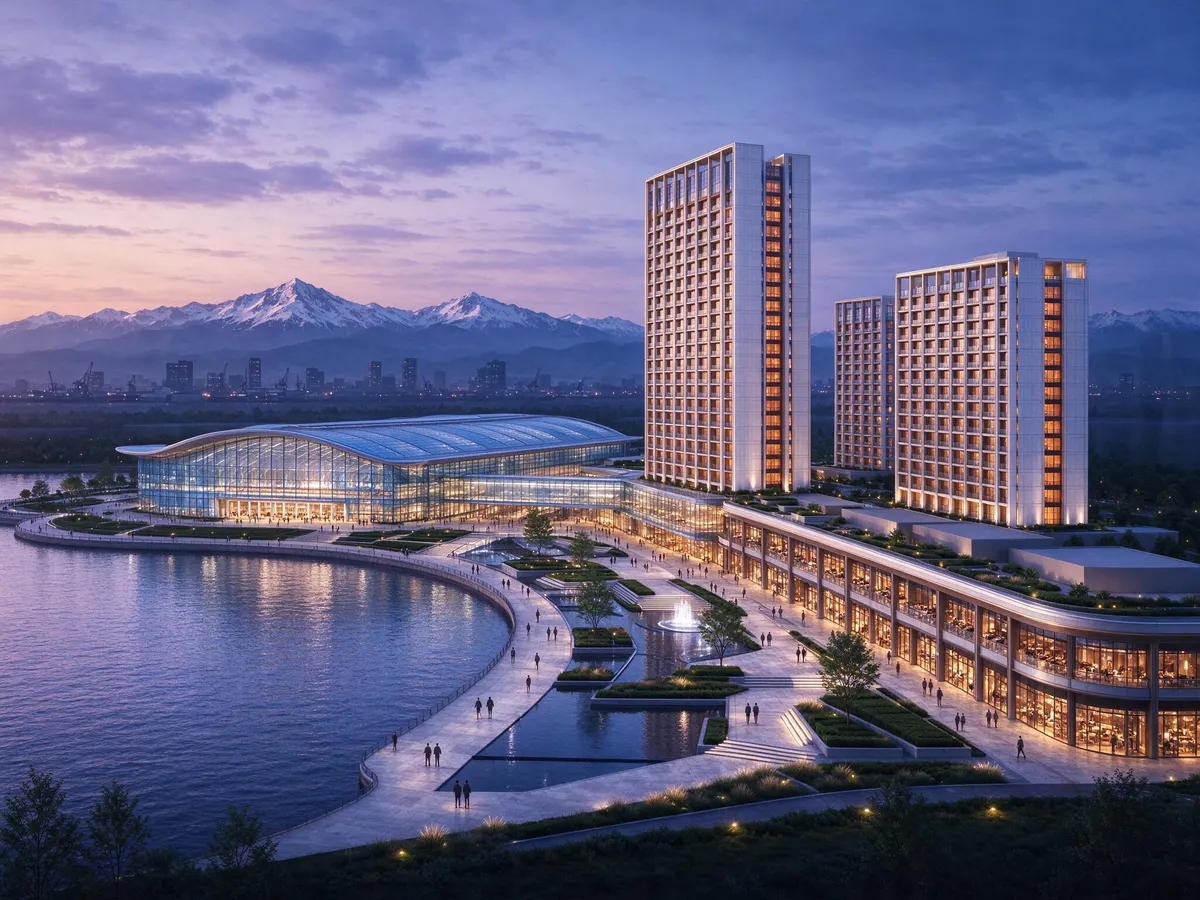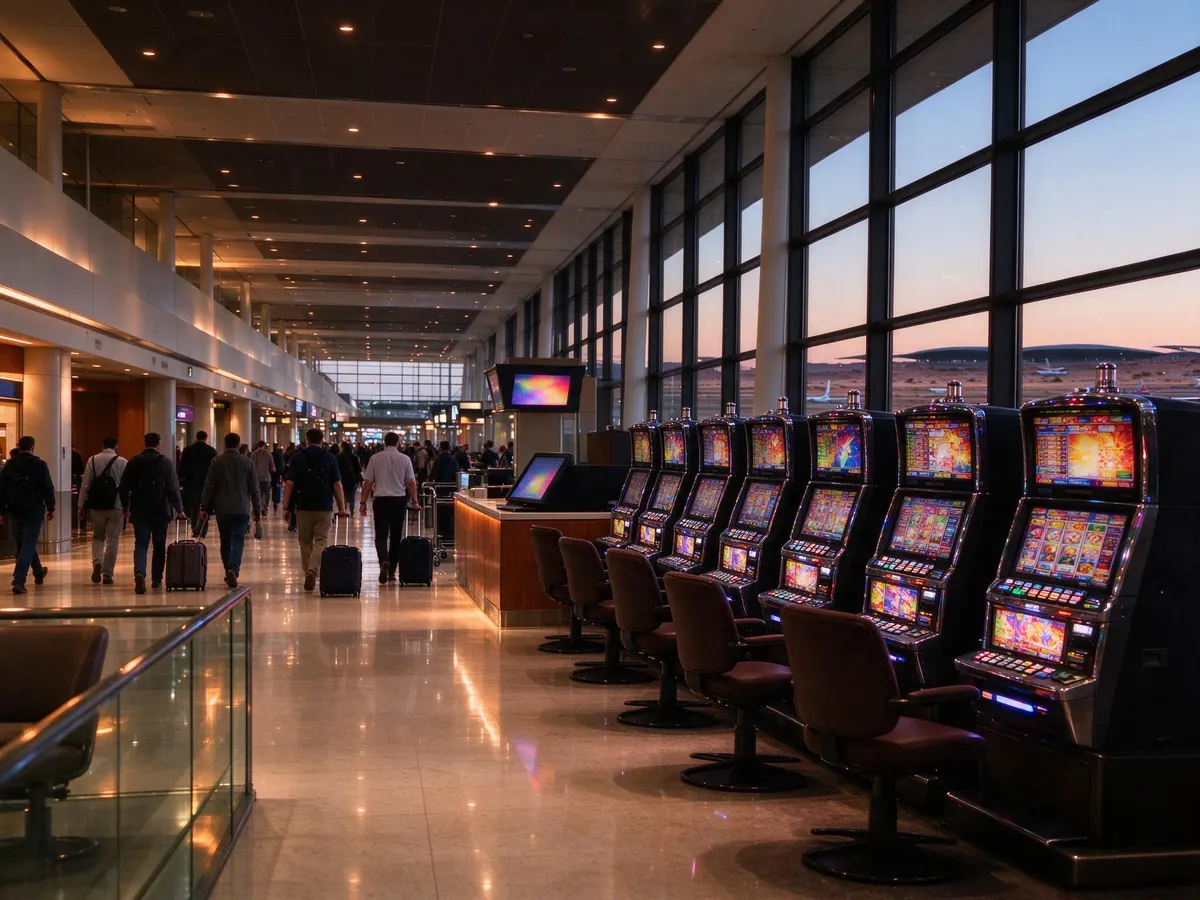
At Harry Reid International, the slot machines sit between the gates and the exits, and people play them while their boarding group is called. Clark County now wants to route roughly 26 more gates’ worth of passengers past them. The multibillion-dollar overhaul that county officials have unveiled for the airport is the clearest institutional bet yet on continued Las Vegas casino tourism growth, and it matters well beyond the Strip, because the Vegas template still sets what players everywhere expect a casino to look like, online included.
It is also a plan with a conspicuous hole in it. There is no finalised budget and no complete project timeline. County officials say formal cost estimates will come next year. So the honest version of this story is a lot of confirmed gate counts attached to a number nobody has published.
What the Harry Reid airport expansion actually includes
The Harry Reid airport expansion replaces infrastructure built for 1990s and early-2000s passenger volumes and aircraft, according to Clark County Aviation Director James Chrisley, who presented the plan to the Clark County Commission. Reid is currently the nation’s fifth-busiest airport by aircraft movements, up from eighth place in 2019. Chrisley framed the upgrades around the city’s turn toward global sports and mega-event travel rather than around any particular visitor forecast.
The gate work is the substance. Terminal 1 goes from 39 gates to roughly 65, built in two moves: a new wing of about 11 gates near the former Terminal 2 site, then a conversion of the existing A and B “satellite” layout into a linear pier design, which takes those gates from 23 to about 33. Terminal 3 gets renumbered as Terminal 2, which will confuse returning visitors for a decade.
| Element | What the plan says | Timing per the source |
|---|---|---|
| New Terminal 1 wing | About 11 gates near the former Terminal 2 site | Not specified |
| A and B gate conversion | Satellite layout becomes a linear pier; 23 gates to about 33 | After the new wing opens |
| Vertical circulation at Terminal 1 | Escalators and lifts so travellers no longer cross a taxi lane between baggage claim and the garage | Not specified |
| Taxi and ride-share staging | Reconfigured; frees roughly 330 parking spots at peak | Not specified |
| Customs facility and charter ramp | Dedicated CBP facility on the west side for international private aircraft tied to events such as Formula One | In preparation |
| Automated transit system | New vehicles after about 2 million miles over a decade of service | By year’s end |
| Aircraft Rescue and Firefighting station | New station | Groundbreaking expected around November 2026, with officials hoping to have it running about a year later, around 2027 |
| Operational support warehouse | 92,700 square feet, replacing an older structure due for demolition | Opened earlier this year |
| Concessions, dining, restrooms | Major expansions across the A and C gates | Not specified |
A new administrative building and parking garage follow the gate work. The whole thing is phased so the airport keeps operating throughout, and Clark County intends to chase federal money for a substantial share of it. Aviation consultant Mike Boyd told the Las Vegas Review-Journal that Reid is well placed to compete for discretionary FAA grants, citing its delivery record and its mix of domestic and international carriers.
One more detail deserves attention: planners describe all of this as a bridge to a two-airport system, with a proposed commercial airport in the Ivanpah Valley still at least a decade out. This is not a final build. It is the stopgap.
What 26 extra gates say about a Vegas tourism boom
Gate capacity is a forecast made in concrete, which is why the expansion reads as a vegas tourism boom signal: you do not spend years converting satellite terminals into piers unless you expect more aeroplanes, and more aeroplanes means more people. Capacity decisions commit a jurisdiction for decades, so they carry more information about expected demand than any marketing statement.
Here is where the standard reading stops working. The source does not contain a visitor-number projection, a passenger-growth percentage, or a gaming-revenue forecast. What it contains is a stated motive: sports and mega-event travel, with Formula One named specifically and a customs facility being built for the private jets those events attract. That is a different traveller from the 1990s slot tourist who filled the terminals the county now calls obsolete.
So treating the Harry Reid plan as direct evidence of growth in casino play is a step the evidence does not support. It is strong evidence of expected growth in Las Vegas visitor numbers. Whether those additional visitors spend their money on a casino floor, at a race, at a residency show, or at a convention is a question the airport plan simply does not answer, and I would not put a figure on it. The county itself declined to put a figure on the project.
Las Vegas as the default reference point in casino travel trends
Vegas remains the benchmark casino destination because it solved integration before anyone else had to. The Strip’s resorts combine gaming floors with hotels, arenas, convention space, restaurants and theatres under single ownership, which means a visitor can arrive for something that is not gambling and still walk past a roulette table four times a day. Macau, Singapore, and every aspiring integrated-resort market has been reverse-engineering that arrangement ever since.
The brand recognition compounds the physical advantage. “Vegas” functions as shorthand for casino entertainment in places that have never licensed a casino, which is a positional asset no newer destination can buy. Current casino travel trends lean toward exactly this model, where gaming is one revenue line inside a broader entertainment business rather than the whole business. The airport plan, with its event-driven justification, is that logic applied to the runway.
How the Vegas ideal shapes online casino design
Online casinos borrow their visual grammar from Las Vegas because that is the reference image players already carry. Classic slot iconography, the bars, sevens and cherries, descends from mechanical machines that no longer dominate any real floor. Live dealer studios are lit and staged like a Strip pit. Loyalty programmes use the language of comps and high-roller tiers invented by land-based hosts. None of this is accidental styling; it is the fastest way to make an unfamiliar product legible.
The expectations travel too. Players arrive at online platforms expecting variety on the scale of a resort floor, promotions framed as hospitality, and jackpot presentation borrowed from show business. Studios answer with immersive slot design, themed series and progressive networks built to produce a spectacle. Las Vegas visitor growth keeps that reference image refreshed, which is part of why land-based investment still matters to an industry that mostly runs on servers.
The borrowing has limits worth naming. A resort floor is engineered to keep you inside; an app does not need architecture to do that, and the mechanics underneath the Vegas-styled surface are governed by the same arithmetic either way. Every game carries a house edge, and the return-to-player figure describes long-run averages across millions of rounds, not a session. Those airport slot machines by the gates are a useful reminder: route-operated machines outside casino floors are generally set to return less, and a terminal is the worst possible place to make up for a bad weekend. Set a deposit limit, treat the spend as entertainment cost, and use the self-exclusion and cool-off tools every licensed operator provides.
What the concrete tells you, and what it doesn’t
Continued physical investment on this scale indicates that the people closest to the demand data expect more of it, and that interest in Vegas-style casino entertainment has not peaked. That much is a fair reading of a county committing to 26 additional gates and a decade-out second airport.
The rest stays open until Clark County publishes its cost estimates next year. A multibillion-dollar label with no budget attached is a signal of intent, not a plan, and the share funded by FAA grants rather than local revenue will say a great deal about how confident Nevada actually is. The gate numbers are the part you can trust today. Everything downstream of them is still a projection, including the one in this article’s headline.