The headline: US$1.72bn of gaming spend at risk
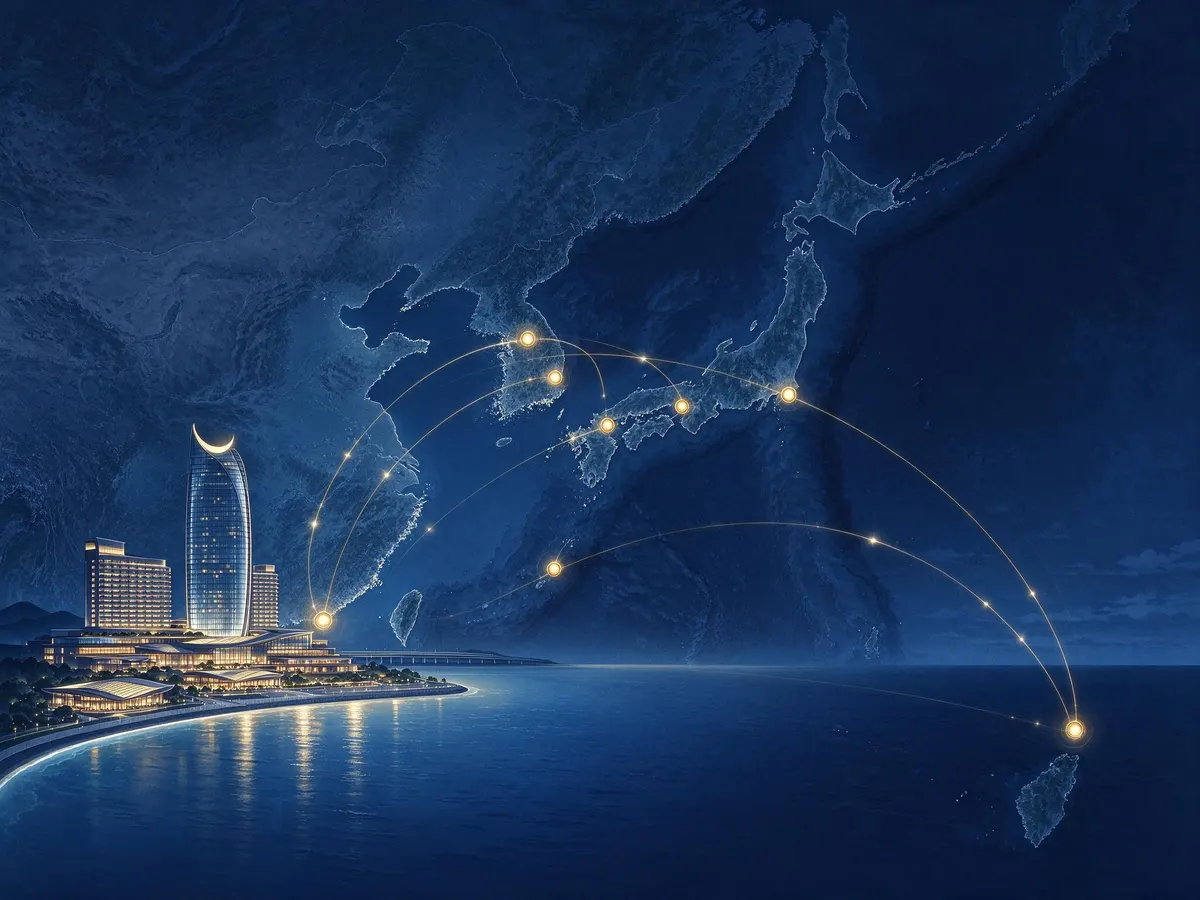
A new study, reported by industry outlet GGRAsia, estimates South Korea’s casinos could shed up to US$1.72 billion in gaming spend once MGM Osaka opens. That is a ceiling, not a forecast, and it measures spend diverted away from Korean tables and machines rather than a guaranteed hit to South Korea casino revenue.
The distinction matters more than the number. “Up to” estimates get quoted as if they were budgets, and by the time a figure like this has travelled through three newsletters it has usually lost the word “up”.
What the number actually measures
The projection models diversion: visitors who currently fly to Korea to gamble choosing a closer or newer option instead. It rests on assumptions about market overlap, the share of Korean casino drop that comes from travellers Japan can plausibly capture, and how much of that spend follows the new supply.
Three things the headline does not tell you, and which you should not assume:
- Whether the figure is an annual run-rate or a cumulative pool spread over several years. The reporting frames it as spend at risk once the resort opens, not as a dated annual forecast.
- Whether diverted spend lands in Osaka at all, or splits between Japan, Macau and Singapore.
- Whether total regional demand stays fixed. New supply has historically grown Asian casino tourism as well as redistributed it, which is the single biggest reason a pure diversion model overstates the damage.
Treat US$1.72bn as the top of a range built on reasonable assumptions, and treat anyone quoting it as a certainty with suspicion.
Why MGM Osaka lands where it hurts
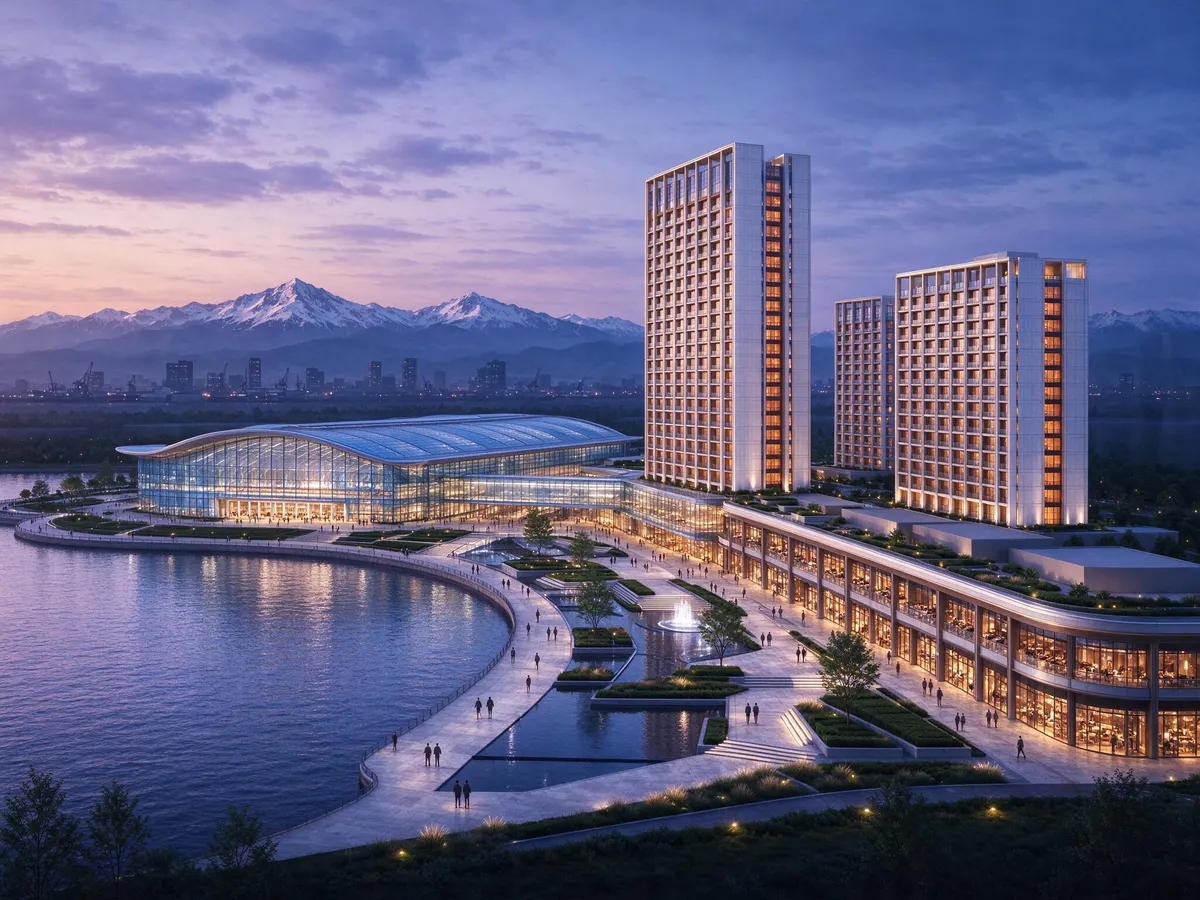
MGM Osaka is Japan’s first licensed integrated resort, developed by MGM Resorts International and Orix on reclaimed land at Yumeshima in Osaka Bay, with the partners targeting an opening around 2030. It removes the one structural advantage Korea has enjoyed for decades: Japanese players who want a casino have had to leave Japan to find one.
The scale and shape of the Osaka resort
Under Japan’s IR Act the casino floor is capped at 3% of the resort’s total floor area, so this is a hotel, convention and entertainment complex with a gaming room attached, not a gaming hall with amenities bolted on. That cap is often read as a limit on competitive threat. I think that reading is wrong. A small floor in a very large building, run by an operator with MGM’s premium-segment reach and a Kansai catchment of tens of millions of people within a short train ride, can carry an enormous amount of play per table.
The IR Act also imposes a ¥6,000 entry fee on Japanese residents plus visit caps of three per seven days and ten per 28 days. Those rules push the commercial logic of the property toward inbound visitors, which is precisely the pool Korea’s foreigner-only casinos depend on.
The visitors both markets are chasing
Korea’s foreigner-only venues draw heavily on Chinese and Japanese travellers, with proximity doing most of the work: Incheon and Seoul are short-haul from Tokyo, Osaka and Fukuoka. Osaka sits inside the same two-to-three hour flight radius for Chinese and Southeast Asian regional players and inside the domestic rail network for Japanese ones.
So the overlap is real at both ends. Japanese outbound gaming trips to Korea become optional. Regional premium-mass and VIP baccarat players gain a credible new destination that happens to be in one of Asia’s strongest inbound tourism markets. Korea already knows what a demand shock looks like, having watched Chinese group travel restrictions hollow out visitation after 2017, so the sensitivity of its casino gross gaming revenue to a single source market is not theoretical.
The exposure inside Korea is uneven
Korea has 17 casinos, and 16 of them are closed to Korean nationals. That split decides who should be worried.
Foreigner-only casinos carry the risk; Kangwon Land mostly doesn’t
Paradise City in Incheon, Inspire Entertainment Resort next to it, the Walkerhill and Seven Luck properties in Seoul, and the Jeju casinos all compete for the same international visitor pool MGM Osaka will target. They have no domestic fallback. If inbound gaming trips thin out, there is nothing to replace them with.
Kangwon Land is the exception and the insulated one. As the only venue where Korean nationals may legally gamble, its demand base is domestic and its competitive set is the Korean grey and offshore online market, not Osaka Bay. A Japanese resort opening in 2030 barely touches it.
| Segment | Core demand base | Exposure to MGM Osaka |
|---|---|---|
| Incheon IRs (Paradise City, Inspire) | Short-haul inbound, premium mass and VIP | High: direct overlap on regional travellers |
| Seoul foreigner-only casinos | Inbound business and leisure visitors | High |
| Jeju casinos | Chinese-weighted inbound | Moderate: already supply-constrained and volatile |
| Kangwon Land | Domestic players only | Low |
Japan joins a region already fighting over the same travellers
Osaka is the newest entrant in an Asia gambling market where every established hub is spending to defend its share. Macau’s gross gaming revenue has clawed back a large share of its 2019 level without fully returning to it, and its concessionaires are committed to heavy non-gaming investment. Singapore’s two integrated resorts are mid-expansion, including a fourth tower at Marina Bay Sands. The Philippines pushed through a full ban on offshore gaming operators while its Entertainment City casinos keep adding rooms.
None of that is new supply aimed at a growing pool of brand-new players. It is largely the same cross-border flow of Chinese, Japanese, Korean and Southeast Asian visitors being fought over with better hardware. That is why operators track visitor-flow data, air capacity and visa policy as closely as they track monthly GGR. The scarce input in this market is not capital. It is travellers with a reason to fly.
What Korea can realistically do before 2030
Korea’s structural problem is the foreigner-only rule, and the honest answer is that nobody should expect it to change quickly. Opening venues other than Kangwon Land to residents would be a major social-policy reversal in a country with a cautious stance on domestic gambling, and operators have long argued for relaxation without getting it.
What is actually available in the meantime: deeper non-gaming amenity investment at the Incheon resorts, harder work on air routes and MICE business, sharper targeting of regional premium mass rather than a shrinking junket market, and continued lobbying on access rules. Here is what I would not do. I would not underwrite a new Korean integrated resort on a model that holds Japanese outbound visitation flat through 2030, and I would not assume the entire US$1.72bn is Korea’s to lose. A meaningful slice of that diverted spend has Macau and Singapore written on it, not Osaka.
The markers worth tracking
The first is the one everyone will check: whether MGM and Orix hold the 2030 target or slip it. Construction on reclaimed land in Osaka Bay has already produced schedule revisions, and each year of delay is another year of Korean revenue the study’s downside never touches.
After that, watch Japanese and Chinese arrival numbers at Incheon and Jeju, the drop mix at Paradise City and Inspire as Inspire matures, any movement on Korea’s foreigner-only restriction, and whether a second Japanese IR licence advances. If Japanese visitation to Korean casinos starts softening well before Osaka opens, the diversion thesis was always about something broader than one resort. That is the question the US$1.72bn figure cannot answer, and the one worth your attention.
Industry analysis only. Gambling carries a built-in house edge and should never be treated as a source of income; if it stops being entertainment, use operator deposit limits, cool-off periods or self-exclusion tools.