
The upgrade you only notice when it breaks
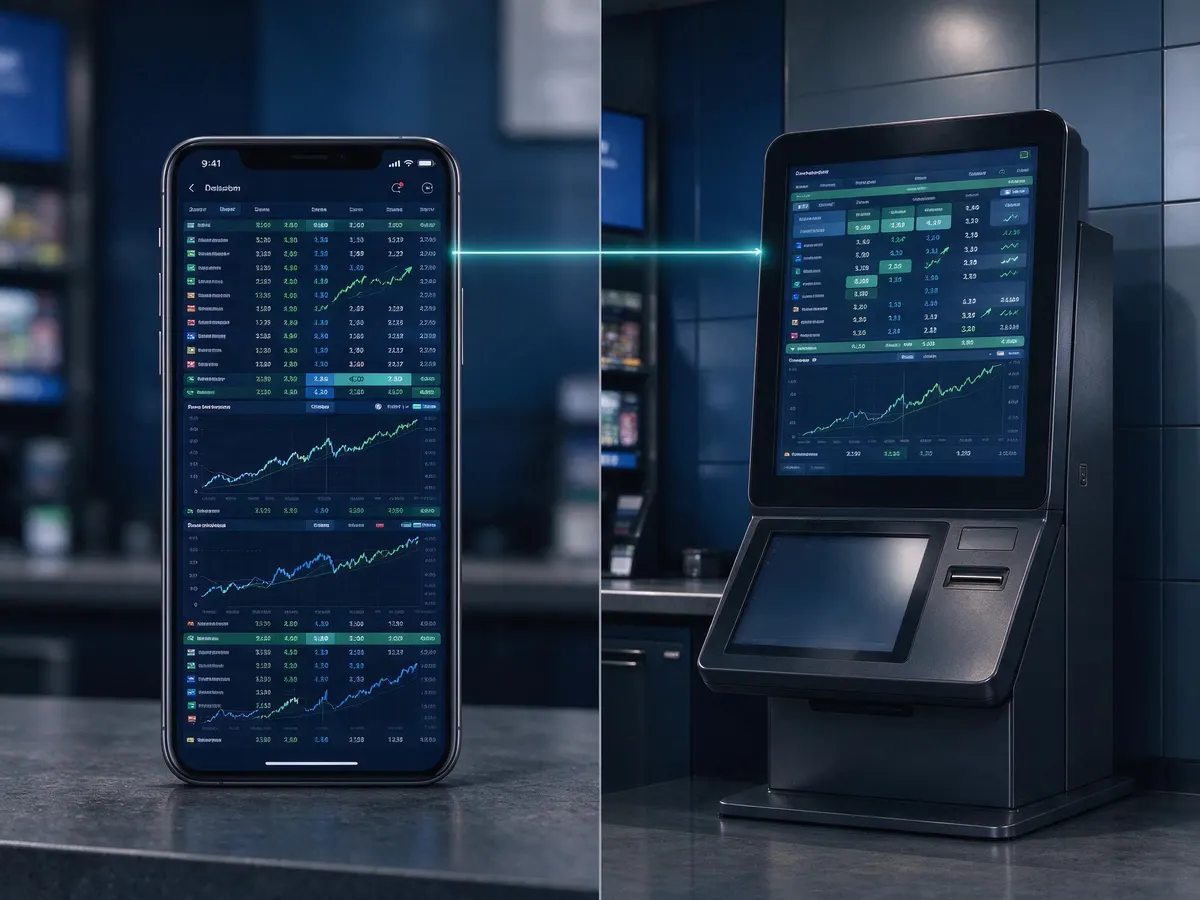
You tap a price in the 78th minute, the slip spins for two seconds, and the odds have moved by the time it comes back. That pause is the part of sportsbook betting technology bettors actually feel, and replacing the software behind it is what the industry means by “next-generation”. Stripped of the vendor language, these launches usually change three things: where your account lives, how fast prices refresh, and whether betting on your phone and betting at a counter draw on the same balance.
The concrete trigger for this piece is one real launch, not a universal rollout. In October 2026, trade press reported that OpenBet had taken its sportsbook live with Loterie Romande, the exclusive regulated sports betting operator for Switzerland’s six French-speaking cantons, moving the operator’s JouezSport offering onto the OpenBet platform across online, self-service terminals and 2,350 retail points of sale. One operator, one market. What it illustrates is a direction of travel that bettors in other markets will meet eventually, which is the only reason it is worth your attention.
Here is the position I will defend: a platform migration tells you something real about convenience and almost nothing about value. The margin in the price is set by the operator’s trading policy, not by the vendor’s logo. Bettors who read “next-gen” as “better odds for me” are the ones who end up disappointed.
What omnichannel sports betting actually means
Omnichannel sports betting means one account, one balance and one bet history, whether you place the bet in an app, on a website, or at a shop counter or self-service terminal. The old model ran these as separate businesses with separate databases: a retail slip was a piece of paper with its own identity, and your online account knew nothing about it.
That split had consequences you may remember. A voucher won in a shop had to be redeemed in a shop. Loyalty points earned online did not exist at the counter. If you wanted both, you registered twice, verified your identity twice, and funded two balances. Unifying the back end collapses that into a single ledger.
| What you’re doing | Separate digital and retail systems | Unified platform |
|---|---|---|
| Opening an account | Register online, register again in shop | One registration, one KYC check |
| Funding a bet | Separate online balance and cash at counter | Single wallet usable across channels |
| Checking past bets | App history plus paper slips | One bet history for every channel |
| Promotions and loyalty | Channel-specific, rarely transferable | Cross-channel loyalty, in principle |
| Collecting a win | Where the bet was placed | Settled to the same account balance |
Inside the OpenBet and Loterie Romande betting platform upgrade
The reported substance of the launch is narrow and worth keeping narrow. According to the trade report, OpenBet’s sportsbook went live with Loterie Romande, a World Lottery Association member, covering online play, self-service betting terminals and 2,350 point-of-sale locations, with the operator’s stated aim being improvement of its omnichannel offering. The same report notes OpenBet’s technology powers more than 20 lotteries worldwide. No performance figures were published, and I am not going to supply any.
What a unified betting account changes day to day
One login, one balance, one history. In practical terms a bettor stops managing two relationships with the same operator. A deposit made at home can fund a slip placed at a terminal on the way to a match. A bonus does not evaporate because you used the wrong channel to claim it. Bet settlement lands in one place, so you can see what you actually staked across a month rather than guessing from a drawer of paper slips.
That last point matters more than the marketing does. A unified betting account is the first time many people see their real total spend in one number. Some will not enjoy the view.
Why linking the retail sportsbook to your digital account matters
A retail sportsbook that writes to the same account removes re-registration and makes winnings portable. You verify your identity once rather than at every channel, and a payout can sit in the wallet you already use instead of being handed over as cash or a voucher that must be redeemed in person.
Operators pursue this for cross-channel loyalty, and it would be naive to pretend otherwise. A single account makes customers easier to keep and easier to market to. The convenience is genuine; so is the commercial motive behind it.
Live odds technology and the speed problem in in-play betting
Faster live odds technology means prices refresh closer to real time and the gap between tapping a price and the bet being accepted shrinks. In-play betting is where this bites. The risk trading engine recalculates markets as events happen, feeds them through to the app, and either accepts your stake at the displayed price or rejects it because the price moved. Lower latency means fewer of those rejections and fewer frozen markets during the moments you most want to bet.
Modern platforms also tend to handle cash-out more reliably, because cash-out is just another price that has to be calculated and honoured quickly. Here is the qualification nobody puts in a press release: cash-out is almost never guaranteed. Read the terms and you will usually find the operator may suspend or refuse it when a market is unstable. Faster technology reduces how often that happens. It does not remove the clause.
This paragraph is a general description of where the industry is heading, not a claim about any specific site. If you want the mechanics in more depth, our in-play betting guide covers how live markets are priced and suspended.
Signs a digital sportsbook platform has actually modernized
You can test most of this yourself in an afternoon, without reading a single trade article:
- One wallet and one bet history visible across app, website and any retail or terminal channel the operator runs
- In-play prices that update continuously rather than freezing for long stretches during live play
- Bet acceptance that completes in roughly a second, with rejections explained rather than silent
- Promotions that read the same wherever you claim them, instead of channel-only offers with separate terms
- Cash-out that stays available through normal passages of play, with its limits stated clearly in the terms
- Deposit limits, loss limits, time-outs and self-exclusion reachable from the account menu in a couple of taps
That last item is the one I weigh most heavily. A platform that buries its limit controls while surfacing a one-tap re-deposit button has told you what it optimised for.
Does the channel still matter once the back end is shared?
Yes, usually, for a while. Shared accounts do not mean identical experiences. Self-service terminals and counter systems run on hardware that gets replaced on a slower cycle than a phone app, and the in-shop interface often carries a reduced set of markets, slower refresh and fewer live features even after the back end has been unified. Settlement and balances line up; the interface does not necessarily keep pace.
Which channel suits you comes down to habit rather than value. Prices are typically set centrally, so the shop is not quietly offering a worse line than the app. If you want deep in-play markets and fast cash-out, the app will almost always be ahead. If you prefer a weekend accumulator placed in person and settled into the same account, retail now costs you very little in convenience.
What to check before you let the news influence your account
Treat these launches as weather, not instruction. The Loterie Romande case shows a regulated operator consolidating digital and retail onto one platform, and the broader pattern across the industry points the same way: unified accounts, lower latency on live markets, consistent promotions across channels. It does not follow that your own sportsbook will change next quarter, or that it should.
I would not switch operators because of a platform migration. I would switch because of the things a migration cannot fix: withdrawal speed, how prices compare on the markets I actually bet, whether the odds on offer hold up against rivals, and whether disputes get answered by a person. Technology changes the friction. It leaves the house edge exactly where it was.
One honest consequence of all this is worth sitting with. Removing friction removes pauses, and pauses are where people reconsider. A single wallet that works at the counter and in the app makes it easier to bet more without noticing, so set deposit and loss limits before the smoother experience arrives rather than after. If betting has stopped feeling like entertainment, the account tools and the free, confidential support services listed on our responsible gambling page are the useful next step. No platform, however modern, changes the arithmetic that the operator profits over time.