
What GGRAsia reported about the Bee Macau line
New playing cards and a card shoe are set to roll off the production line at the Bee Macau factory, according to a report by GGRAsia. That is the extent of what has been reported, and it is worth being precise about it: the report concerns manufacturing of cards and a shoe, not any claim about capacity, technical specification, or which operators will use the output.
It reads like a minor trade item. For anyone who plays baccarat, blackjack or their live-streamed equivalents, it is a useful window into something you almost never see and have no way to inspect yourself: casino card shoe technology, and the physical supply chain that decides whether the deck in front of a dealer can be trusted.
What is a card shoe, and what job does it do at the table?
A card shoe is the angled box a dealer draws cards from, and its job is to hold several shuffled decks and release them one at a time in a fixed order. Nothing more glamorous than that. But the three things it quietly achieves are the reason every serious table game uses one.
First, it removes the dealer’s hands from the deck. Once cards are loaded and the shoe is closed, the dealer slides out the top card and cannot reach the rest. Second, it keeps the sequence fixed, so the order produced by the shuffle is the order that gets dealt. Third, it speeds up dealing, which matters commercially because a table’s revenue is a function of rounds per hour.
Baccarat typically uses eight decks in a shoe, blackjack commonly six or eight. A cut card is inserted near the back so the shoe is retired before the final cards are reached. That last detail is a fairness measure as much as a practical one: it stops the end of a shoe becoming a predictable, exploitable tail.
How equipment design blocks the cheats that actually happen
Equipment-level integrity rests on four things: tamper-evident card stock and sealed packaging, controlled shuffling, shoes that can sense or read what leaves them, and documented disposal of used decks. Each addresses a specific attack, and none of them covers everything.
Marked cards are the oldest problem. Modern casino decks are made from laminated card stock with regular patterns, printed in sealed runs, delivered in tamper-evident packaging, and checked at the table before loading. Decks are retired after a short service life and destroyed or defaced, which closes the loop that would otherwise let a marked deck re-enter play. A reader should treat the general practice as industry standard and look to a regulator or test-lab standard, such as those published by gaming test laboratories, for the exact requirements in a given jurisdiction.
Shuffling is the second layer. Automatic shufflers randomise a shoe’s worth of cards mechanically, removing the human hand from the process. Continuous shuffle machines return discards into the pool after each round, which keeps the composition of the remaining cards close to a fresh shoe at all times.
The sensing layer is where the term “technology” genuinely belongs. Card-reading shoes scan each card as it is drawn and feed the result to the table system, so the hand is logged independently of what the dealer calls and anomalies can be flagged in real time. A note on terminology that trips people up: RFID is widely associated with casino chips, where embedded tags allow bet tracking and counterfeit detection, while card-reading shoes more commonly rely on optical scanning of a concealed mark. Both exist. “RFID playing cards” is often used loosely to mean either.
| Risk at the table | Equipment countermeasure | What it does not cover |
|---|---|---|
| Marked or substituted cards | Sealed, tamper-evident decks; short service life; documented destruction | Collusion involving staff during loading |
| Dealer manipulation of the deal order | Closed shoe; card-reading or sensor-equipped shoe logging each draw | Errors in payout or bet acceptance |
| Non-random shuffles | Automatic shuffler or continuous shuffle machine | Any change to the game’s house edge |
| Card counting (advantage play, not cheating) | Continuous shuffling; deeper cut card placement | Skill-based play in games without a shoe |
| Chip counterfeiting | RFID-tagged chips and table-level bet tracking | Anything happening to the cards |
Worth separating clearly: card counting is not cheating. It is legal advantage play that casinos design equipment to neutralise commercially. Lumping it in with marked cards muddies what the hardware is actually for.
Does any of this matter if you only play live dealer games on a screen?
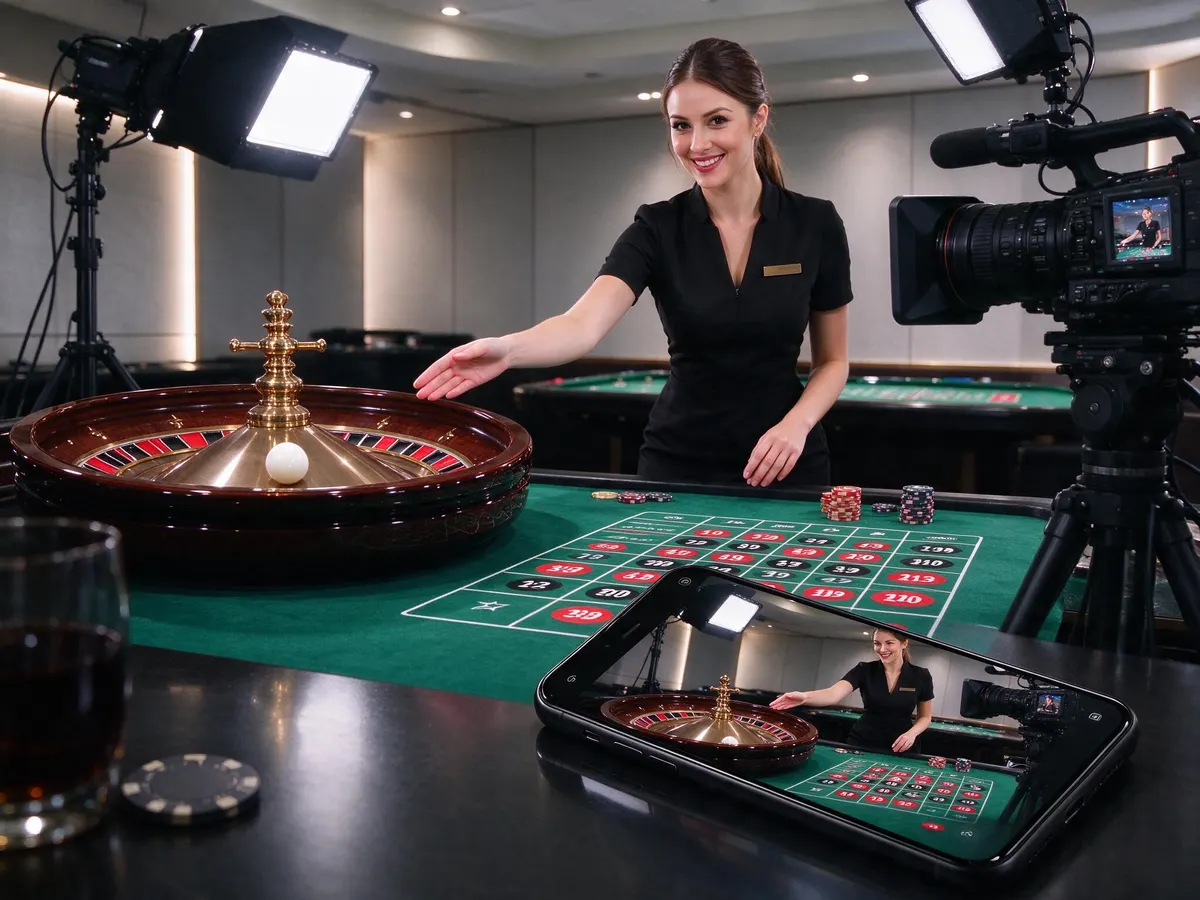
Yes, because a live dealer table is a physical table with a camera on it. The shoe, the shuffler, the cards and the chips in a licensed live studio come from the same category of certified suppliers that serve land-based floors, and they sit under the same equipment approval regime in the jurisdiction where the studio is licensed.
That gives live casino fair play two distinct trust layers, and conflating them is the common mistake. The platform layer covers the software: RNG certification where a game uses one, game logic audits, reported return figures, and the operator’s own licensing. The equipment layer covers the physical objects on camera: whether those cards were sealed, whether the shuffle was machine-driven, whether the shoe logs what it dispenses. A studio can be impeccable on one layer and sloppy on the other. A certified RNG tells you nothing about the deck, and a certified shoe tells you nothing about whether the operator settles your withdrawal.
What the camera does add is a kind of thin, partial verification. You can see the shuffler run, see the cards come out of the shoe, see the cut card inserted. You cannot see the packaging seal, the deck’s provenance, or the destruction log. Anyone claiming they can audit a live table from their sofa is overstating what the stream shows.
Why Macau turns up in the casino equipment supply chain
Macau matters here because it is one of the world’s largest concentrations of live table gaming, and demand of that density tends to pull manufacturing and servicing close to it. Baccarat dominates the floor there, baccarat burns through decks quickly, and cards are a consumable: every shoe retired is a shoe that has to be replaced.
Proximity also helps with the parts of equipment supply that are not glamorous at all, such as delivery scheduling, sealed-chain logistics and on-site servicing of shufflers and shoes. Gaming equipment in Macau falls under the oversight of the territory’s gaming regulator, and approval regimes for equipment are jurisdiction-specific, so a local manufacturing base is useful to suppliers selling into the regional market. Beyond that general picture, treat market-share claims about any single factory with caution unless a supplier or regulator has published them.
Reading a live dealer table before you sit down
Four checks cover most of what a player can realistically verify, and they take about two minutes. Do them once per operator, not once per session.
- Find the licence. The operator’s footer should name a regulator and a licence number you can look up on the regulator’s own register, not a badge image that links nowhere.
- Watch the equipment on stream. A proper table shows the shoe, the shuffler cycling between shoes, and a cut card going in. Tables that obscure all of this are worth a question.
- Check the game rules panel. It should state the number of decks, the payout schedule, and the theoretical return or house edge for each bet. Missing or vague figures are a signal in themselves.
- Look for named audit and certification bodies. A testing laboratory’s name and a dated report carry weight. An unexplained “fair play certified” graphic does not.
None of this improves your odds, and that is the part worth being blunt about. Certified cards and a sensor-equipped shoe guarantee that the game is the game as advertised. The game as advertised still carries a house edge: in eight-deck baccarat, roughly 1.06% on banker, 1.24% on player, and over 14% on the tie bet. Fair equipment means those are the real numbers you are facing, not better ones.
So the honest position is narrow. A news item about a factory in Macau producing cards and shoes does not tell you a specific table is clean, and it cannot. What it does is show where the chain starts, and the chain is the only thing standing between a logged, sealed, sensor-read deal and someone’s word for it. Your leverage over that chain amounts to picking licensed operators, reading the rules panel, and setting deposit and time limits before you start, since no amount of equipment integrity changes what the edge does to a bankroll over enough hands. If gambling stops being entertainment, the tools to pause or self-exclude are in the account settings for a reason.